
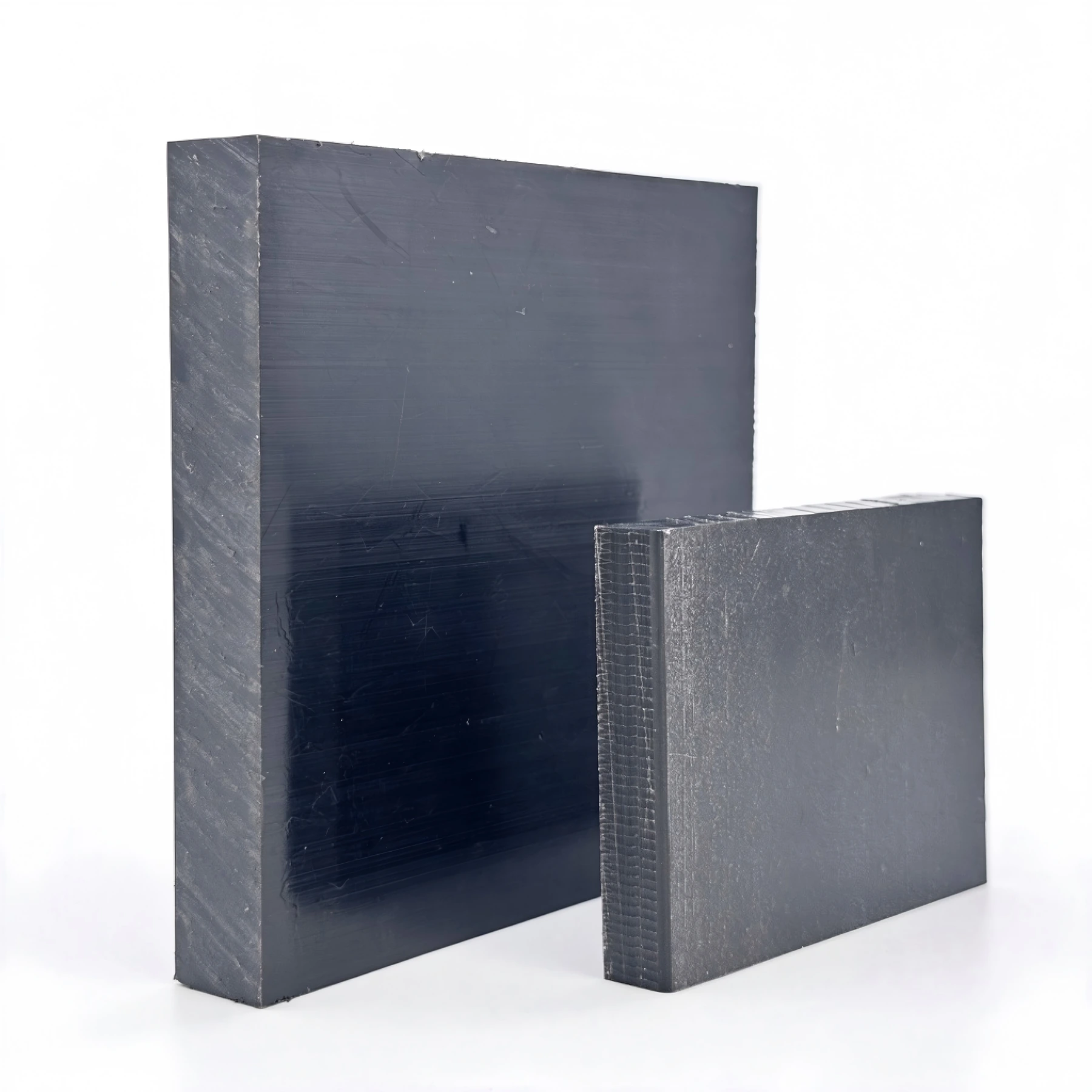
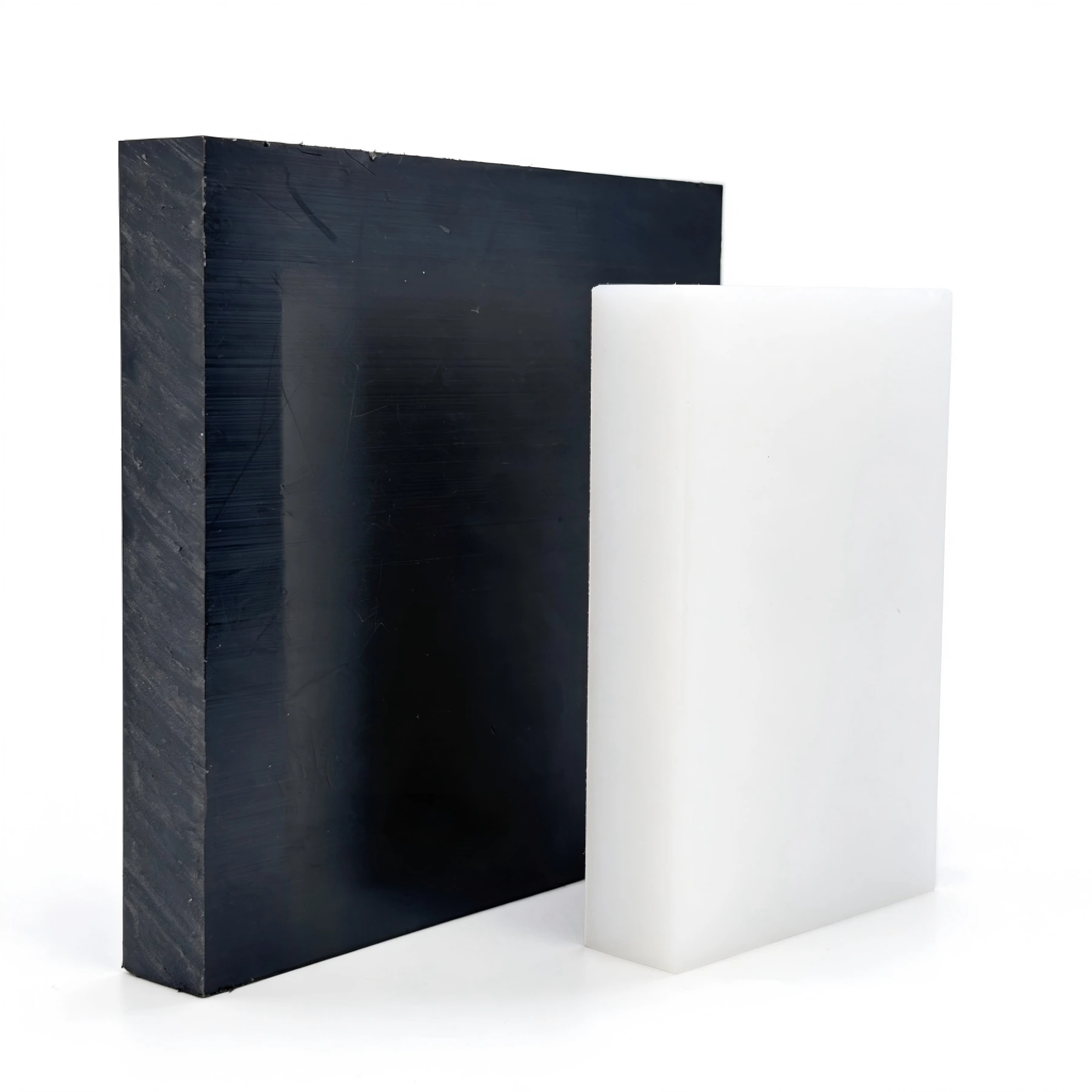
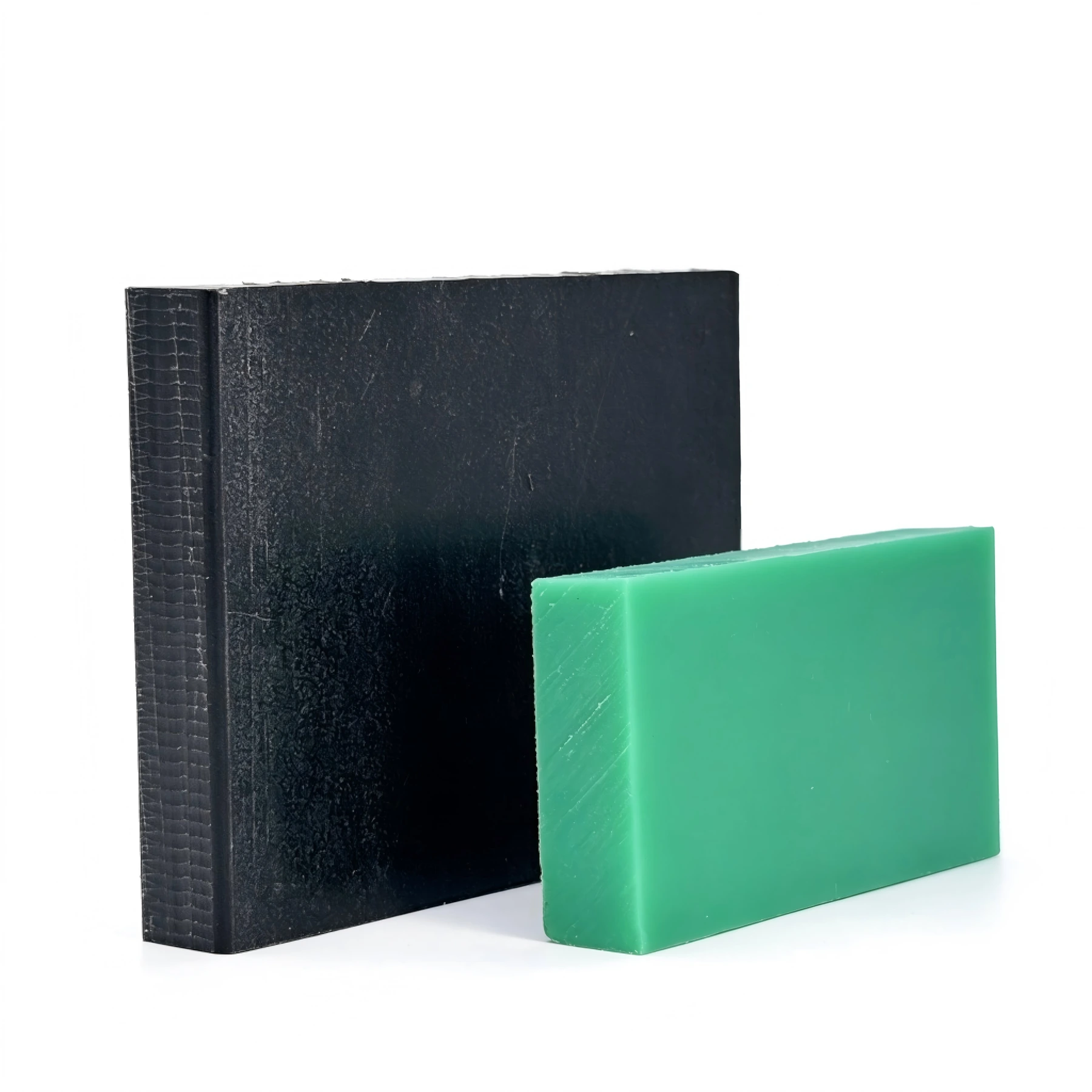
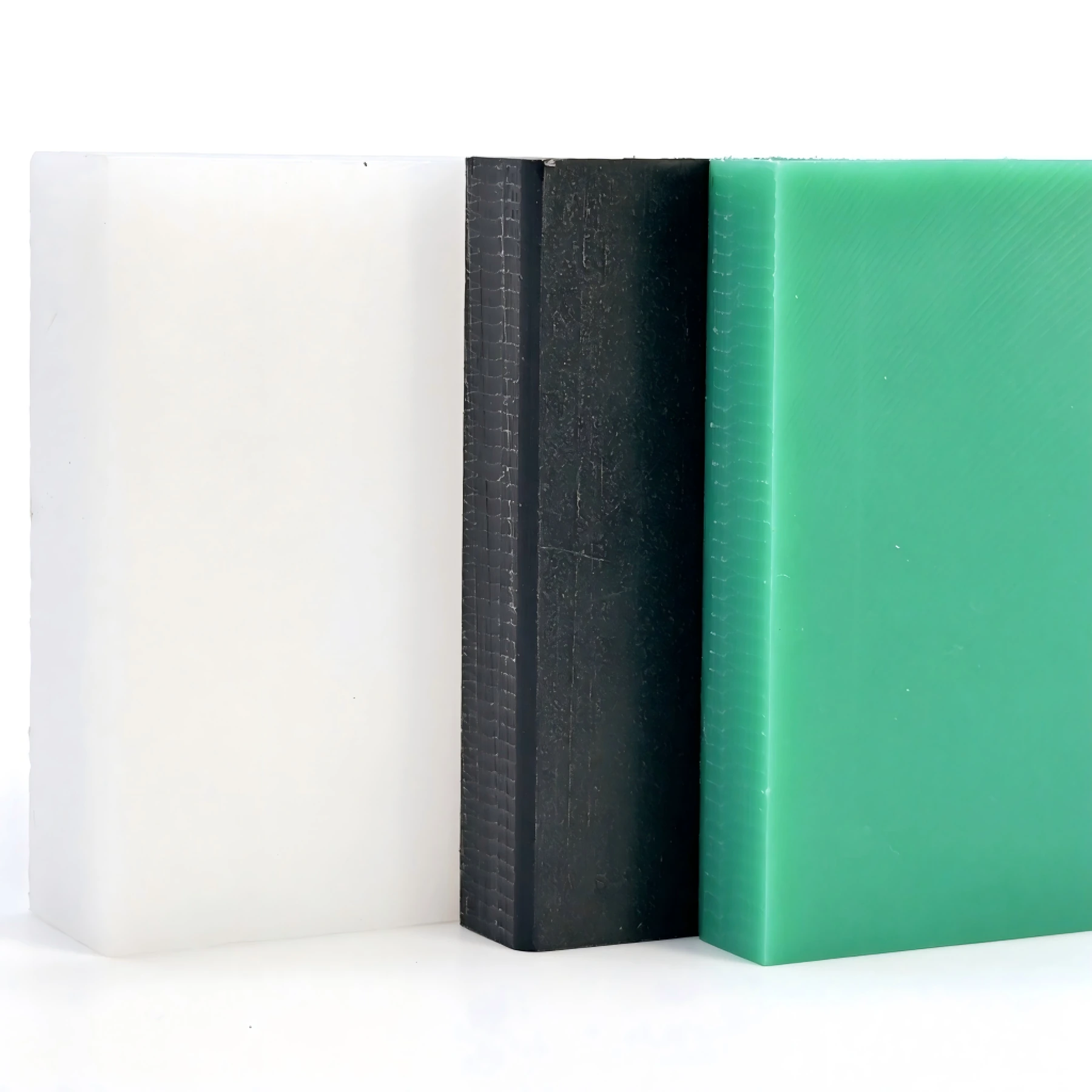
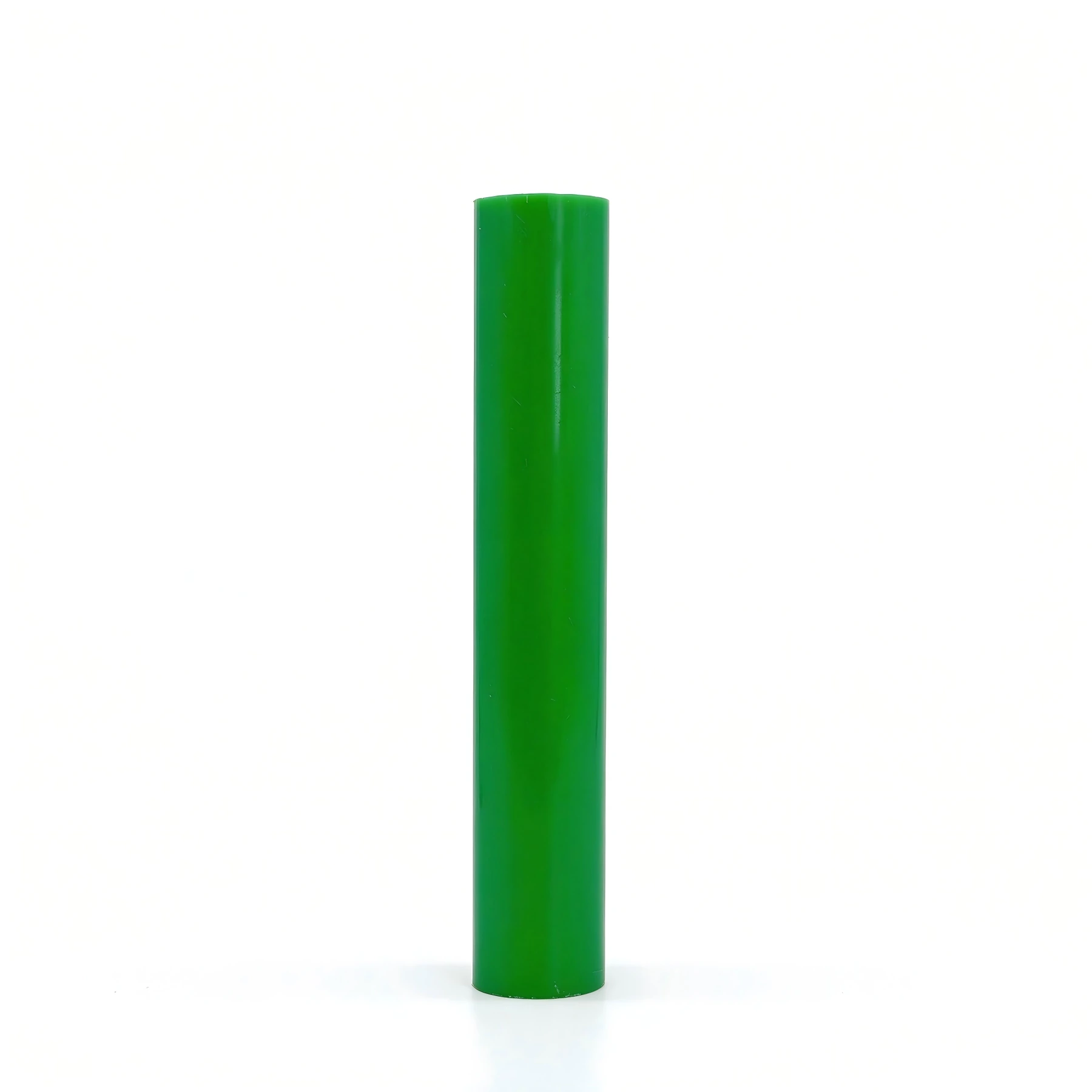
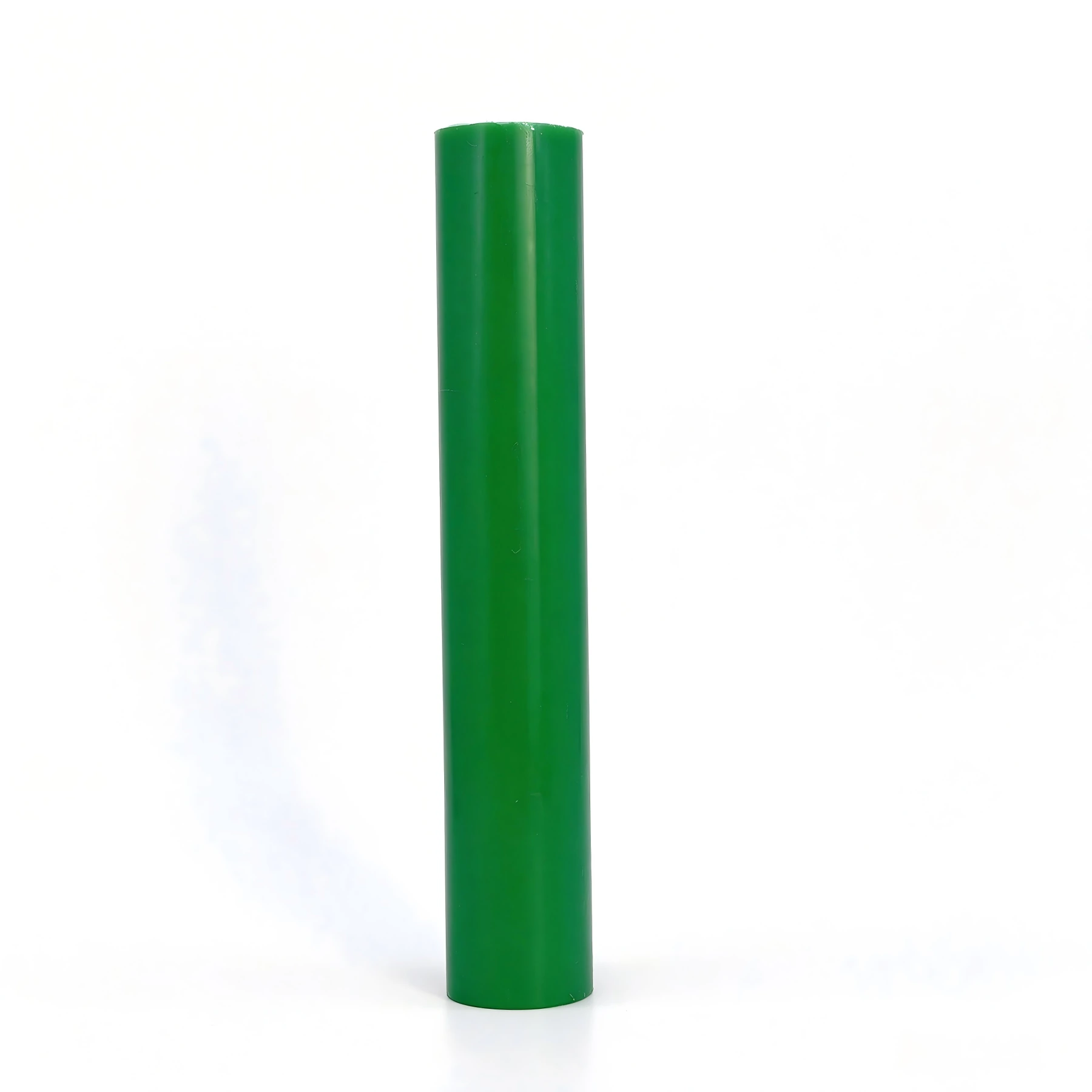
UPE stock — view 01
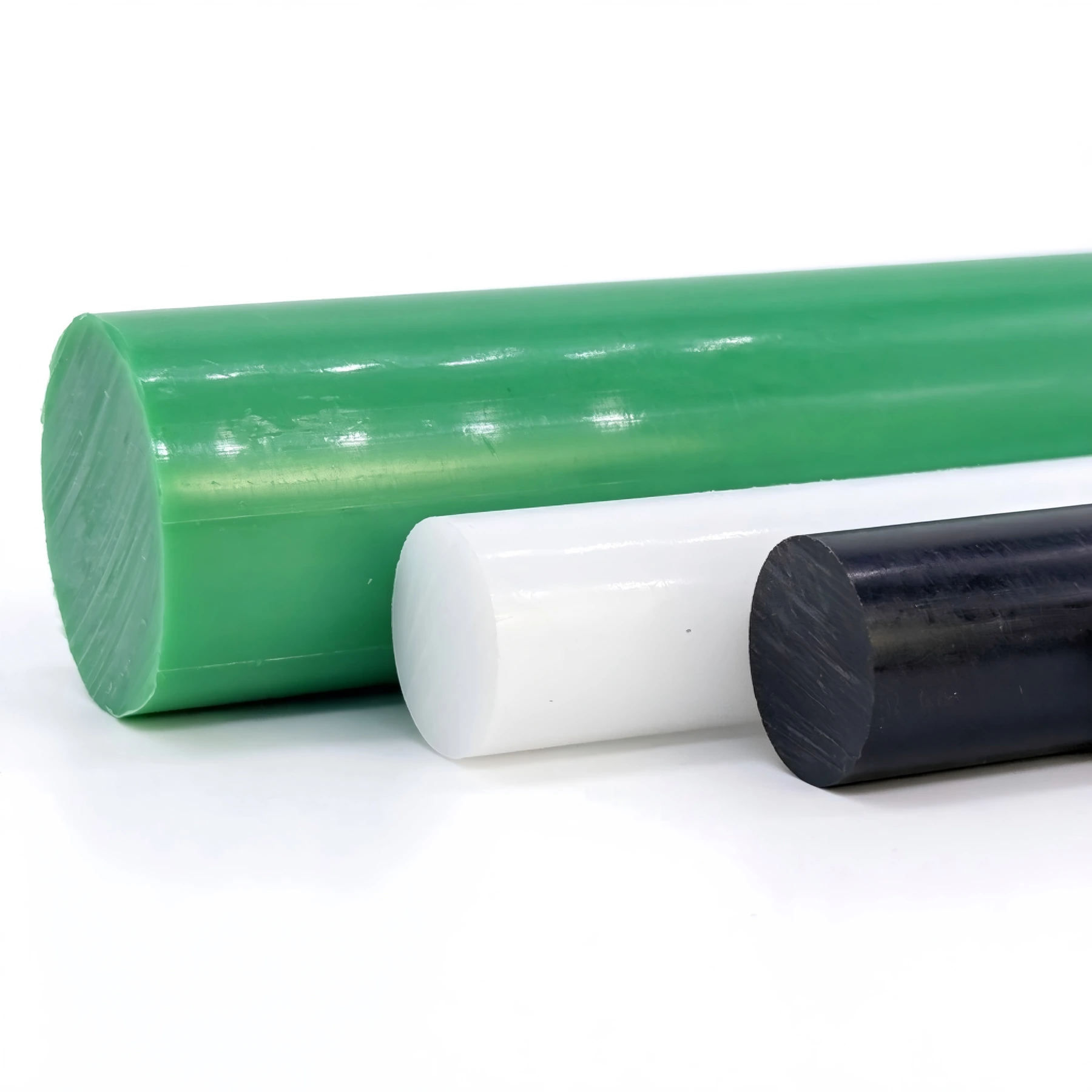
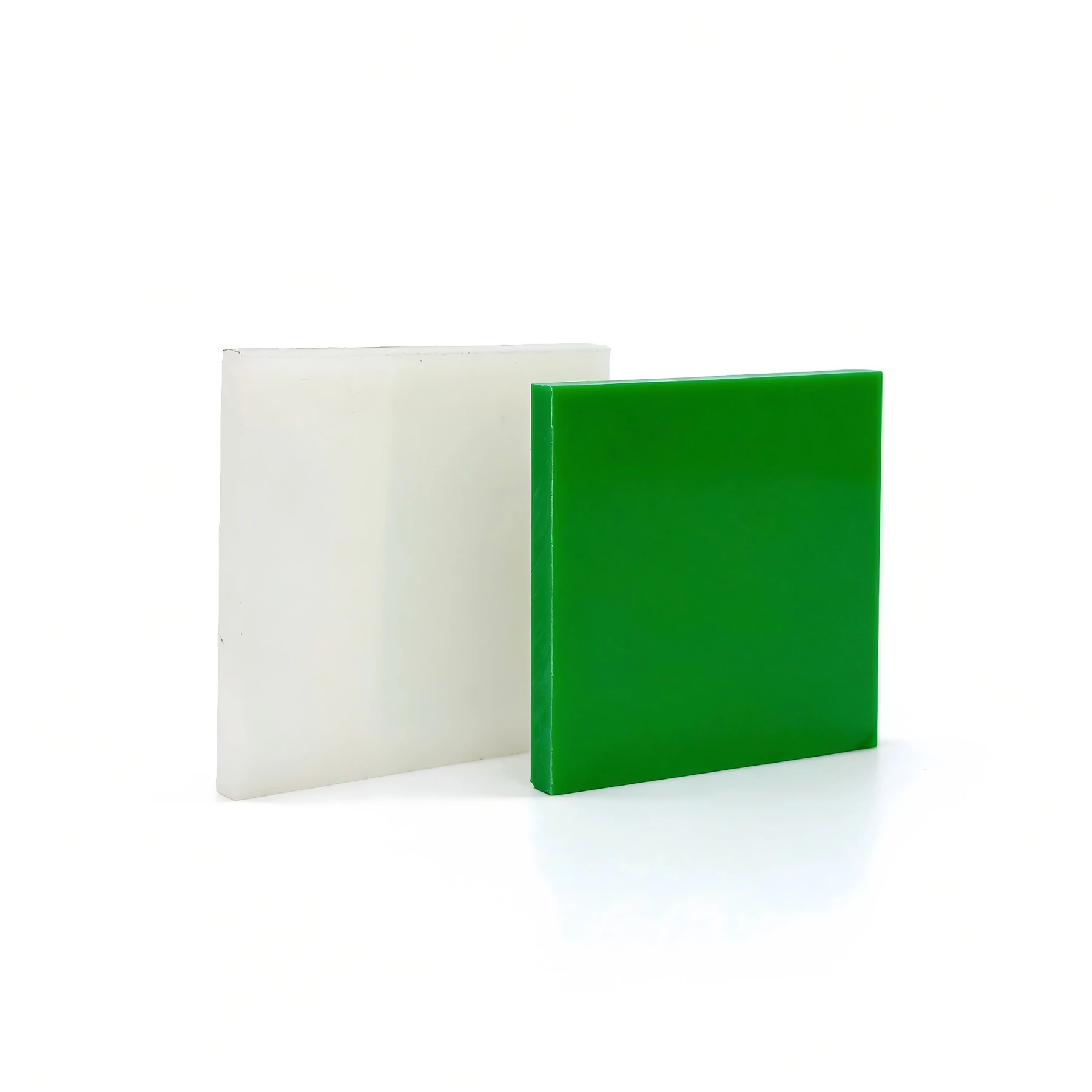
UHMWPE is an ultra-high-molecular-weight polyethylene used for low-friction wear parts and impact-resistant liners.
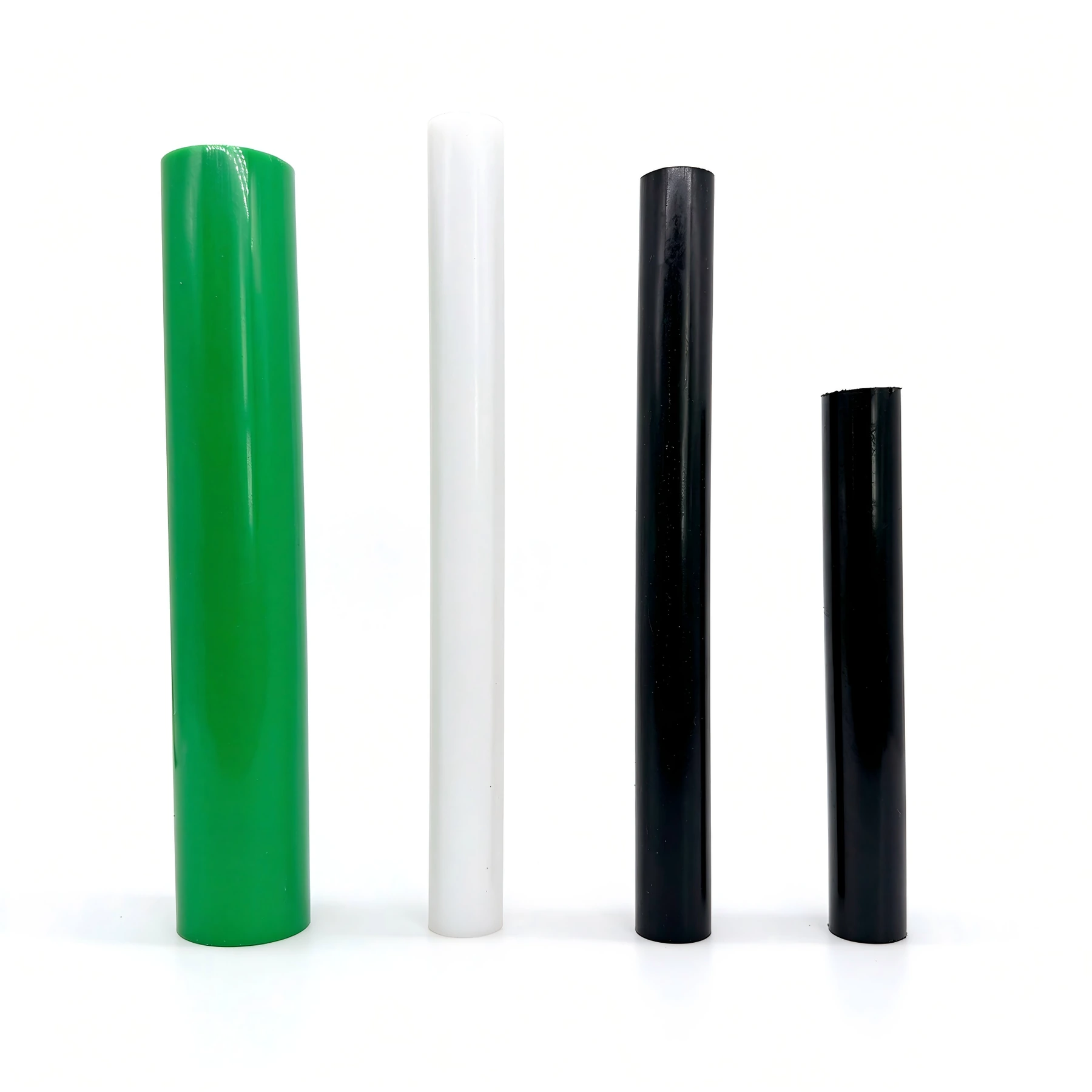


















For a UHMWPE liner, guide or sliding part, bring the contact surfaces, loading and assembly dimensions to Aria. Our material review connects those requirements to the selected grade and manufacturing work. Mark the dimensions that locate the part and distinguish them from surfaces where the wear function is the priority.
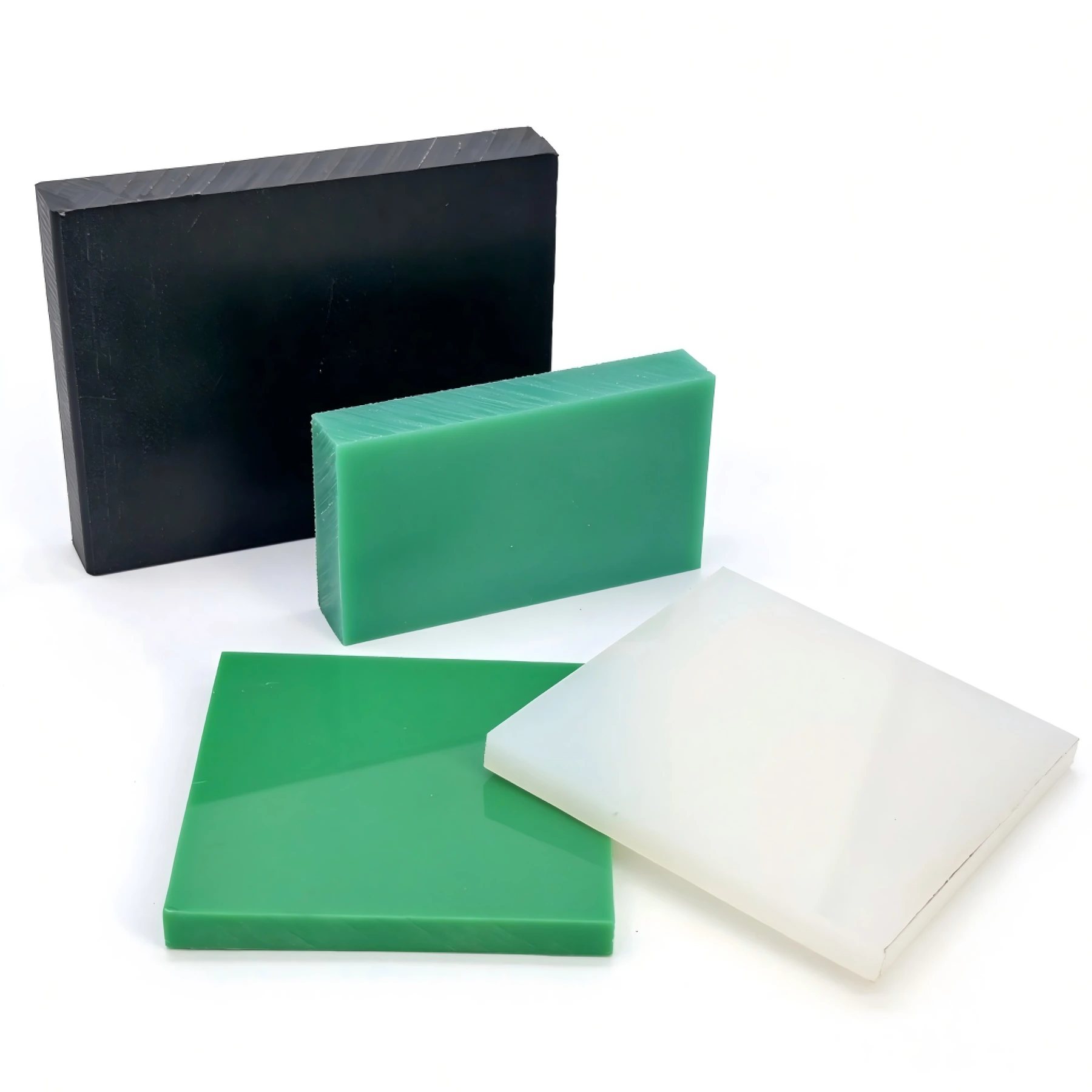
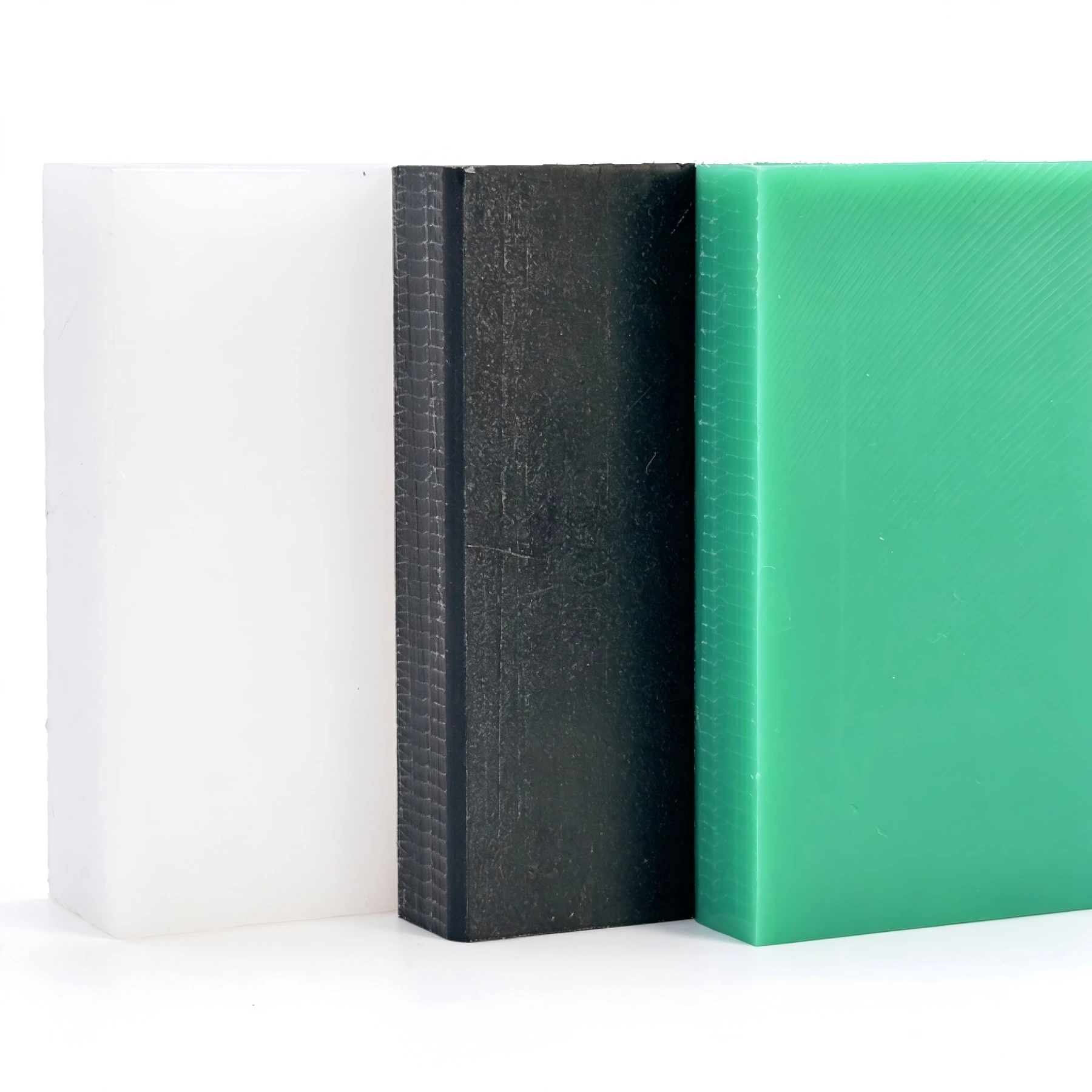
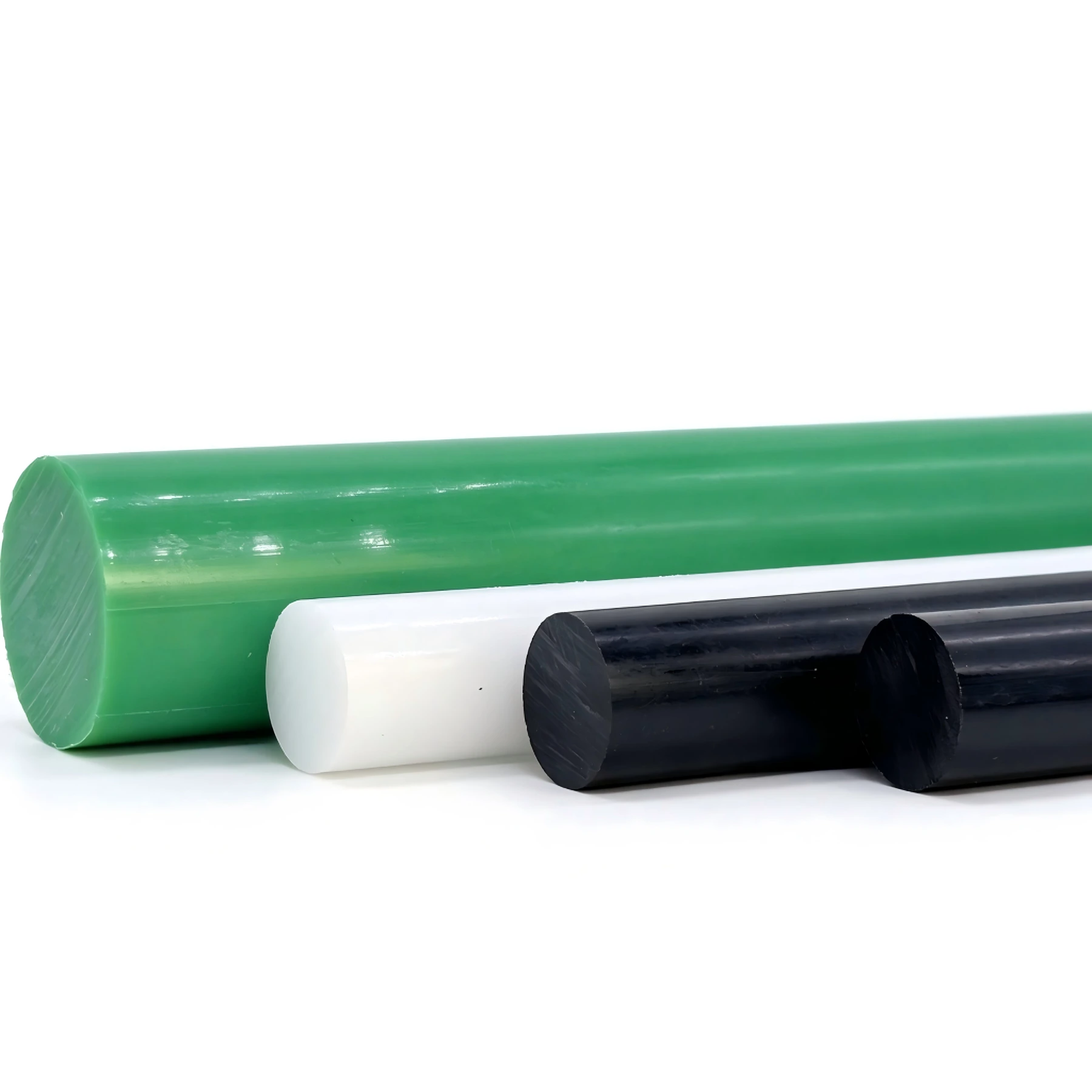
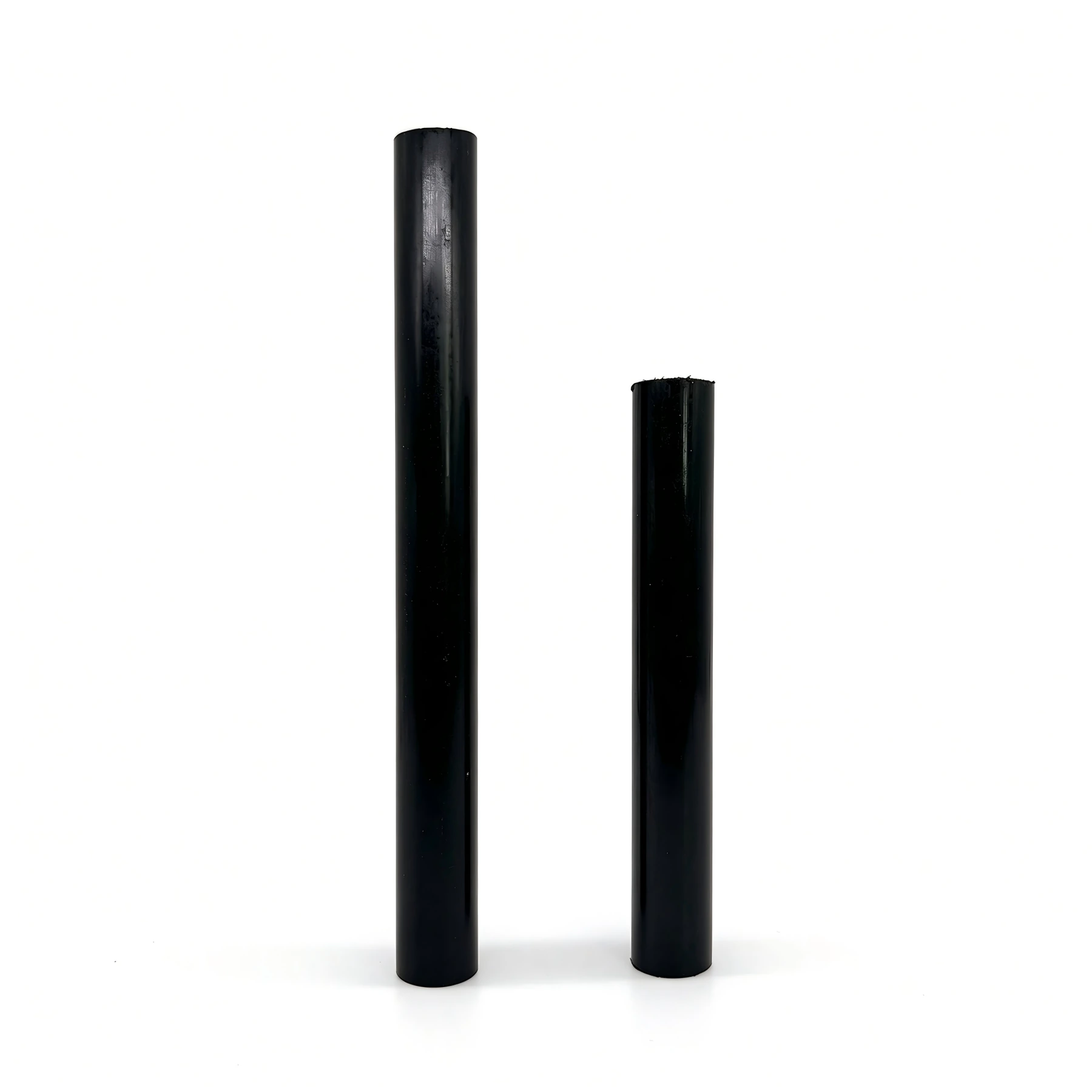
| Property | Details |
|---|---|
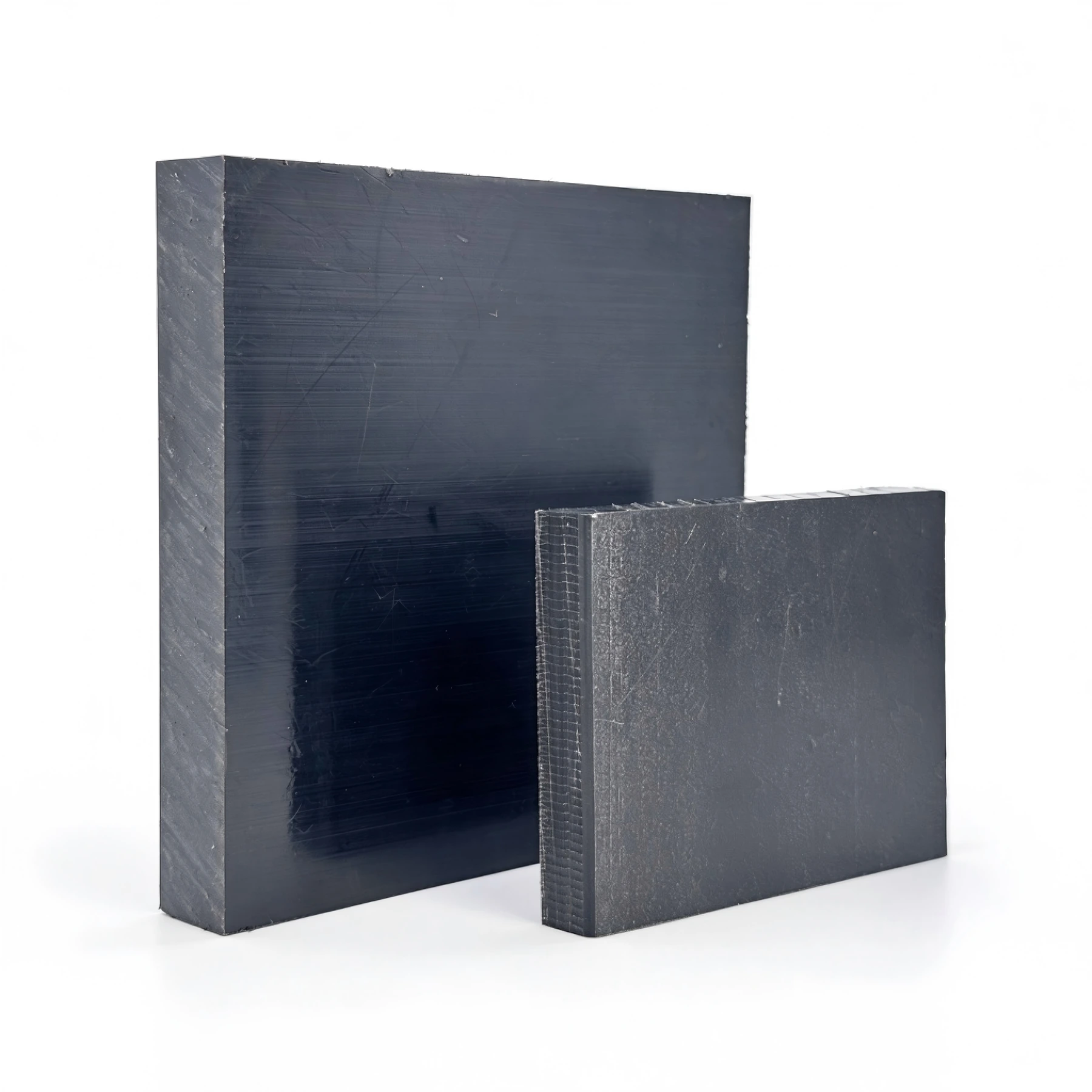
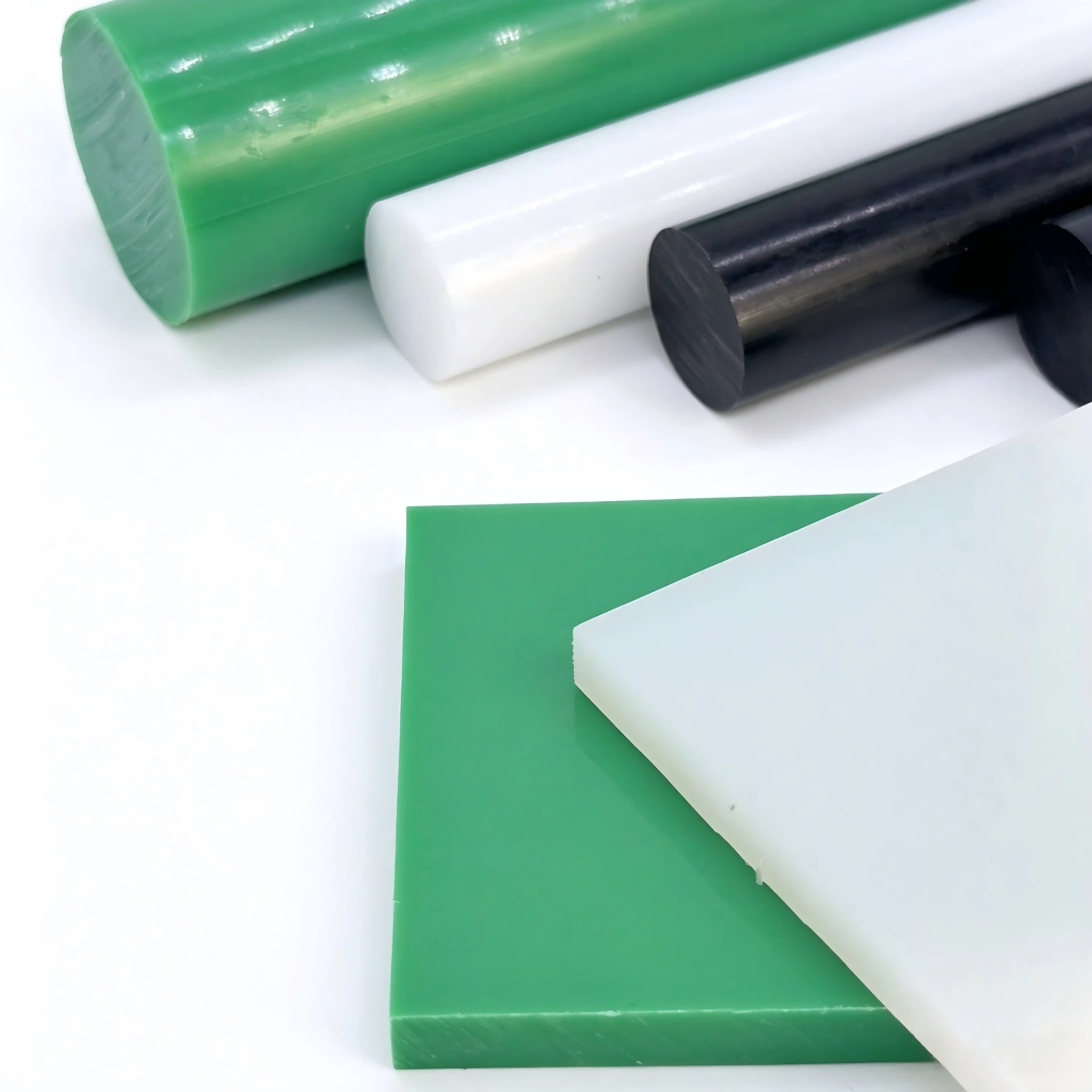
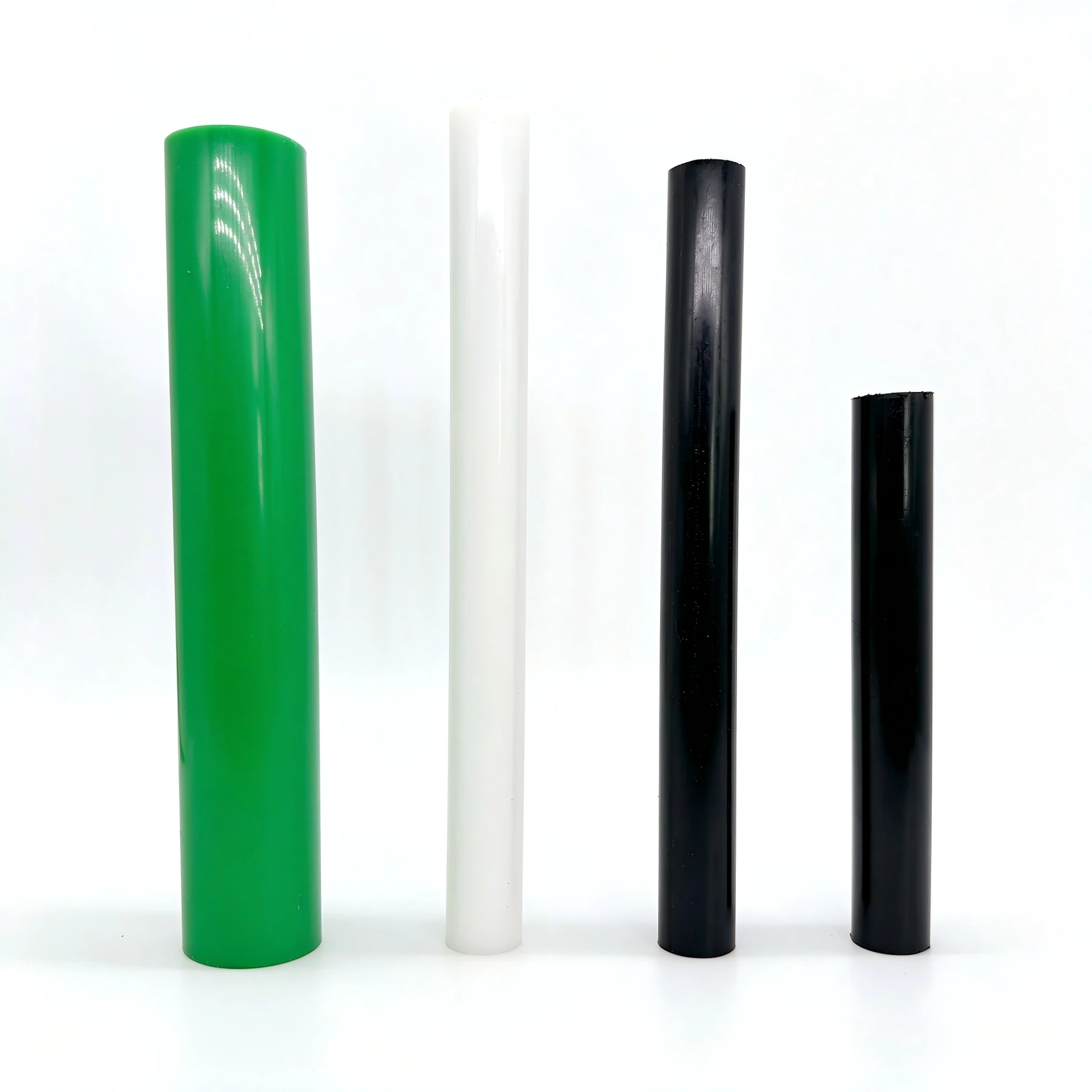
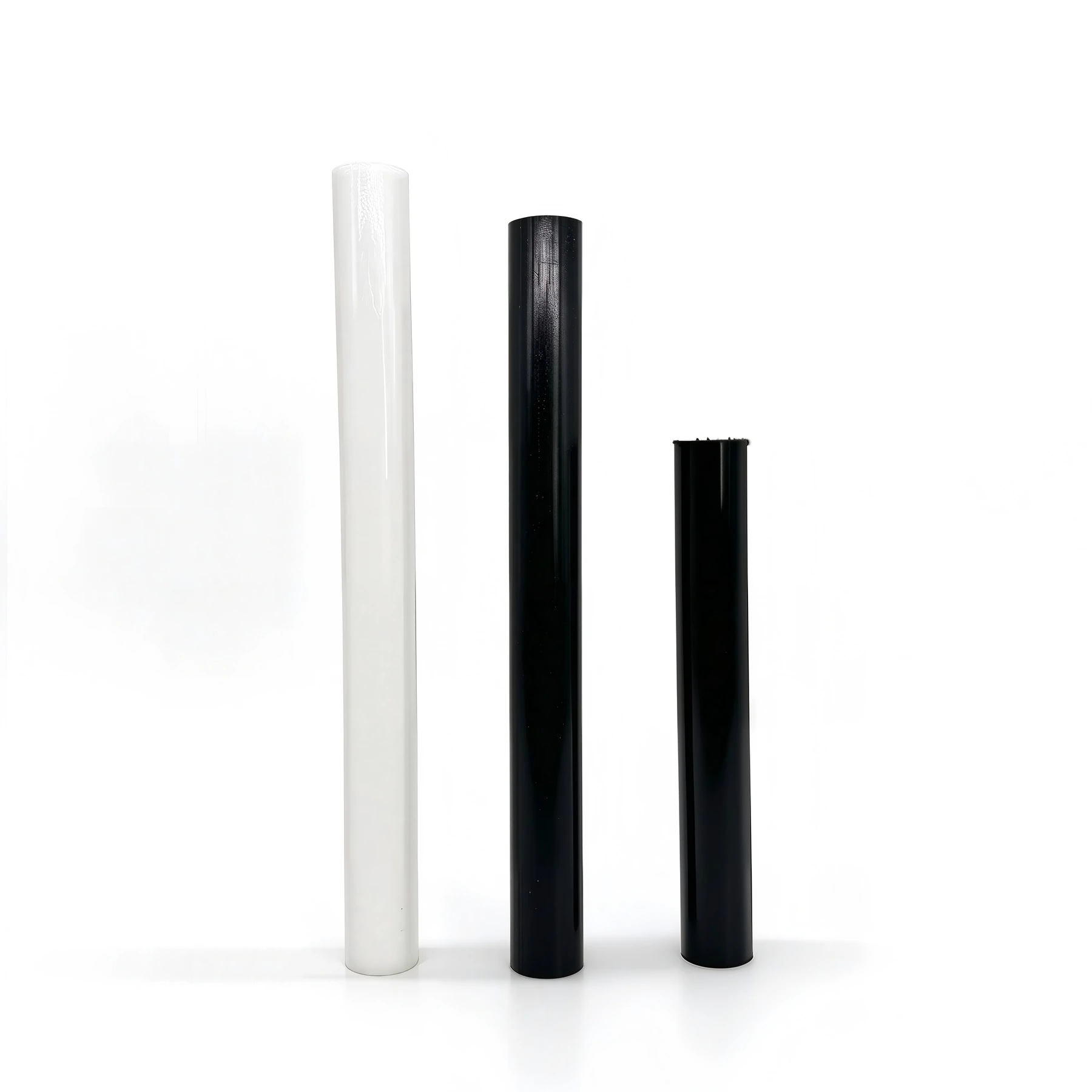
| Available variants | UPE White, UPE Black |
| Colors | White, Black, Natural milky white, Green |
| Special properties | UV-stabilized, antistatic, detectable and enhanced-wear grades require separate specification. |
Detailed values describe TIVAR 1000, UHMWPE machining stock (2011). Family ranges are broader selection references and may include different grades or reinforcement levels. Confirm the selected grade, condition and test method for your part.
| Property | Metric | Imperial | Test method / conditions |
|---|---|---|---|
| Density | 0.93 g/cm³ | 0.0336 lb/in³ | ISO 1183 · 23°C · Reference: TIVAR 1000, UHMWPE machining stock (2011) |
| Water Absorption (saturated) | <0.1 % | <0.1 % | ISO 62 · Saturated at 23°C · Reference: TIVAR 1000, UHMWPE machining stock (2011) |
| Tensile Stress at Yield | 19 MPa | 2,760 psi | ISO 527 · 50 mm/min · Reference: TIVAR 1000, UHMWPE machining stock (2011) |
| Tensile Strain at Break | >50 % | >50 % | ISO 527 · 50 mm/min · Reference: TIVAR 1000, UHMWPE machining stock (2011) |
| Tensile Modulus | 750 MPa | 109,000 psi | ISO 527 · 1 mm/min · Reference: TIVAR 1000, UHMWPE machining stock (2011) |
| Compressive Stress at 5% | 17 MPa | 2,470 psi | ISO 604 · 23°C · Reference: TIVAR 1000, UHMWPE machining stock (2011) |
| Charpy notched impact (23°C) | 115P kJ/m² | 55 ft·lb/in² | ISO 179/1eA · 23°C · Reference: TIVAR 1000, UHMWPE machining stock (2011) |
| Charpy Unnotched | no break - | no break - | ISO 179/1eU · 23°C · Reference: TIVAR 1000, UHMWPE machining stock (2011) |
| Ball Indentation Hardness | 33 N/mm² | 33 N/mm² | ISO 2039-1 · Reference: TIVAR 1000, UHMWPE machining stock (2011) |
| Shore hardness | 60D (Shore D) | 60D (Shore D) | ISO 868 · Reference: TIVAR 1000, UHMWPE machining stock (2011) |
| Melting Temperature | 135 °C | 275 °F | ISO 11357 · Reference: TIVAR 1000, UHMWPE machining stock (2011) |
| HDT (1.80 MPa) | 42 °C | 108 °F | ISO 75-1/-2 · 1.80 MPa · Reference: TIVAR 1000, UHMWPE machining stock (2011) |
| Vicat softening temperature (B50) | 80 °C | 176 °F | ISO 306 · Reference: TIVAR 1000, UHMWPE machining stock (2011) |
| Flammability | HB (UL94) | HB (UL94) | UL 94 · 6 mm · Reference: TIVAR 1000, UHMWPE machining stock (2011) |
| Property | Family reference |
|---|---|
| Material class | Engineering plastic |
| Density (g/cm³) | 0.93–0.94 |
| Tensile strength (MPa) | 18–40 |
| Elongation at break (%) | 50–500 |
| Elastic modulus (GPa) | 0.6–0.8 |
| Hardness | Shore D60–66 |
| Temperature reference (°C) | Service temperature ≤80 |
CNC milling and turning of sheet or rod, compression molding and qualified welding. Use sharp tools and control distortion; conventional injection molding is unsuitable. Allow for creep and thermal expansion in fits. Confirm load, temperature and surface-treatment requirements rather than relying on nominal room-temperature dimensions.
Excellent abrasion and impact resistance, low friction, chemical resistance and very low moisture uptake.
Low stiffness, creep, high thermal expansion and limited heat resistance, with a supplied continuous-service reference around 80°C. It is difficult to paint or bond.
Compare materials for the loads, temperature and environment your part will face.
We review tool access, geometry and material choice before manufacturing.
Dimensional checks and inspection reports for the critical features on your drawing.
Allow for creep and thermal expansion in fits. Confirm load, temperature and surface-treatment requirements rather than relying on nominal room-temperature dimensions. Printing and painting require surface treatment such as flame or corona activation. Electroplating is generally unsuitable.
Guide rails, slides, chain guides, hopper liners, wear plates, gears, bearings, conveyors and selected food-machinery parts.
CNC milling and turning of sheet or rod, compression molding and qualified welding. Use sharp tools and control distortion; conventional injection molding is unsuitable.
Printing and painting require surface treatment such as flame or corona activation. Electroplating is generally unsuitable.
Allow for creep and thermal expansion in fits. Confirm load, temperature and surface-treatment requirements rather than relying on nominal room-temperature dimensions.
Natural translucent milky white. Green and black; outdoor black grades use suitable stabilization.
The 2011 TIVAR 1000 reference sheet gives an indicative average resin molar mass of about 5 million g/mol, calculated from solution viscosity. It also lists a minimum service-temperature reference of -200°C, with impact loading governing practical suitability. These are grade-specific reference data, not a guarantee that every UHMW-PE component will resist impact at that temperature. Confirm the current stock-grade data and validate the finished part under its actual load and temperature.
Upload your CAD files and tell us the material and quantity you need.
Talk to an engineer