


















Setup and finishing affect the quotation.
Sheet metal fabrication
Review cutting, bends, joints, hardware and finishing together with Aria’s engineering team.
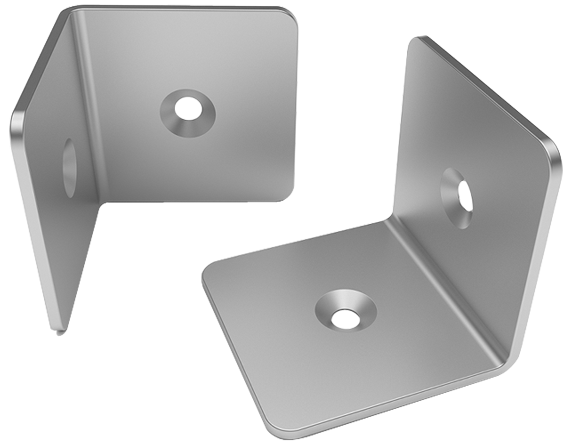
Review the finished assembly together
An enclosure is only useful when the panels align, the hardware fits and the finished surfaces meet the brief. Aria reviews the formed part and drawing with you, bringing cutting, bending, joining and surface finishing into the same quotation discussion. The material grade, thickness and critical interfaces define the work—not just the outline of the blank.
Our engineering support includes design-for-manufacture review for sheet metal projects. Mark visible faces, welded joints and mating features so manufacturing and inspection can follow the same requirements. Finishing and inspection are included when we discuss the order schedule.
Capabilities
Feature, material and thickness dependent.
Confirm quantity, finishing and delivery requirements in the quotation.
Cutting sheet blanks
Cut the outside profile, holes and slots before forming. Edge condition and the distance between features and bend lines affect later operations.
Laser Cutting
A focused laser cuts profiles, holes and slots in sheet stock. Material, thickness and geometry determine edge quality and the achievable cutting accuracy.
Water jet Cutting
A high-pressure water jet cuts the required profile without a thermal cutting zone. Select the route with the material, thickness and edge requirements.
Plasma Cutting
A plasma arc cuts electrically conductive sheet and plate. Select it with the material, thickness and required edge finish; secondary edge preparation may be needed.
Sheet metal bending
A punch and die form a bend in sheet stock. Material, thickness and tooling affect the achievable radius, springback and finished flange geometry.
V bending
A punch presses sheet into a die to produce an angled bend. The drawing’s angle and inside radius guide tool selection and compensation for springback.
U-shaped channels
Opposing bends form channels used for guards, rails and supports. The channel width and flange height must allow access for the forming tools.
Multiple bends
Several bends can create a channel or enclosure from one blank. Bend sequence and tool clearance determine whether later bends remain accessible.
Radius forming
A curved section can spread a bend over a larger area. Confirm the required radius and straight sections because forming access and springback affect the final profile.
Welded assemblies
Welding joins compatible metal components along specified joints. Access, weld size and heat distortion affect the sequence and the finished assembly.
Gas Metal Arc Welding
A continuously fed wire forms the weld under shielding gas. Match the wire, gas and settings to the base metal, thickness and joint.
Gas Tungsten Arc Welding
A non-consumable tungsten electrode creates the arc, with filler added when required. Joint access, material and heat control guide the welding setup.
Laser Welding
A focused laser joins metal along the specified seam. Fit-up, joint access and control of heat distortion affect the result.
Resistance Spot Welding
Electrodes apply pressure and electrical resistance heat to join overlapping sheets at individual spots. Electrode access and sheet compatibility are part of the joint design.
Resistance Seam Welding
Rotating electrodes form a seam along overlapping sheets. Seam geometry, material and access determine the welding arrangement.
Sheet material options
| Material | Grades | Selection |
|---|---|---|
| Aluminum | 5052, 5754, 7075 | Confirm grade, temper and bend suitability. |
| Stainless steel | 304, 316, 316L, 410, 416L, 420, 430, 440 | Confirm availability and forming requirements. |
| Copper | C110, C102 (T2), C103 (T1) | Confirm grade and temper. |
| Mild steel | 1008, 1018, 1020, 1025, 1045; cold-rolled steel | Confirm stock form and grade. |
Sheet metal planning
| Parameter | Range | Conditions |
|---|---|---|
| Sheet thickness | 0.5–10 mm | Available range depends on material and operation; confirm the selected gauge. |
| Laser cutting accuracy | Up to ±0.05 mm | Feature, material and thickness dependent. |
| Hole tolerance guidance | ±0.005 in (±0.127 mm) | Design guidance, not a universal tolerance for all sheet metal operations. |
| Minimum quantity | 1 part | Setup and finishing affect the quotation. |
| Fastest sheet metal production | 3 working days | Confirm quantity, finishing and delivery requirements in the quotation. |
Planning your sheet metal fabrication order
- Tubes in welded assemblies
Round and square tube cutting/bending is available with sheet metal weldments. Dimensions and tolerances are reviewed for the material; no standard tolerance table is provided.
- Batch quantities and timing
Batch guidance: 10–50,000 parts in 7–14 days, with worldwide shipping. Minimum order is 1 part and fastest production is 3 working days; confirm the applicable quantity and schedule.
Applications
Brackets, enclosures and assemblies
Sheet metal fabrication suits brackets, enclosures, panels and assemblies. Cutting defines the flat profile; bending and joining form the finished part.
Design considerations
Bends and feature placement
Keep holes and hardware clear of deformation around bends. Define bend radii, weld locations and cosmetic faces together with the sheet grade and thickness.
Finishing formed parts
Select a finish compatible with the base metal and assembly. Coating thickness, masking and cosmetic requirements belong on the drawing for mating or conductive surfaces.
Selecting a welding process
Joint layout, material and thickness influence welding method and fixture design. Specify weld locations and any surfaces that need blending after joining.
Sheet stock selection
Choose the sheet grade and thickness for stiffness, corrosion exposure and forming. Aluminum, steel and stainless steel require different bend and finishing decisions.
Surface preparation
Edges, welds and visible faces can need different preparation before finishing. Identify cosmetic areas and surfaces that must remain free of coating.
Frequently asked questions
How much does sheet metal fabrication cost?+
A: The cost of sheet metal fabrication depends on the complexity and size of the project. Generally speaking, larger projects that require more intricate details will cost more than smaller, simpler projects. Additionally, there can be additional costs associated with painting and finishing processes. It’s best to consult a professional to get an accurate estimate for your specific project. Get Your Free Quote About Sheet Metal Parts Today. Get Sheet Metal Quotes Online All information and uploads are secure and confidential.
What is Sheet Metal Fabrication?+
A: Sheet metal fabrication is the process of creating parts, components and structures out of sheet metal. Sheet metal fabrication involves cutting, forming, welding, painting and finishing of the material to create an end product that is both attractive and durable.
When you need to use Sheet Metal process?+
A: It can be used to create furniture, industrial machinery, automotive and aerospace structures, medical equipment and more. Sheet metal fabrication is often used in cases where the size and shape of the product need to be exact so it works perfectly with the rest of the system. It is also great for creating complex parts with intricate details, such as cooling fans and housings.
Start a project
Get a quote for your parts
Upload your CAD files and tell us the material and quantity you need.
Talk to an engineer