

















Confirm the drawing, material, geometry and inspection requirements during quotation.
CNC Milling Services
Work directly with Aria’s engineering team on large parts, multi-face features and the fits your assembly depends on.
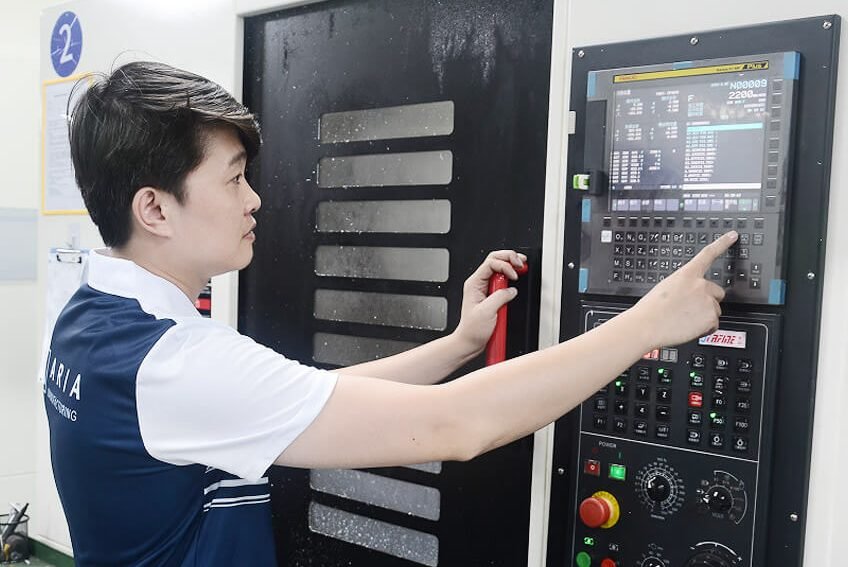
Milled parts, planned around the features that matter
A housing can have a generous outside tolerance and still depend on a closely controlled bearing seat or hole pattern. At Aria, we review those requirements with your model and drawing before production, so tool access, setups and inspection are planned around the features that make the part work.
Our own CNC facility includes 3-axis, 4-axis and 5-axis machines. The choice follows your geometry rather than a blanket promise that more axes are always better. For qualifying repeat quantities, sample approval gives you a check before the production run.
Capabilities
Depends on material, geometry and cutter access.
Tooling and setup affect the quotation.
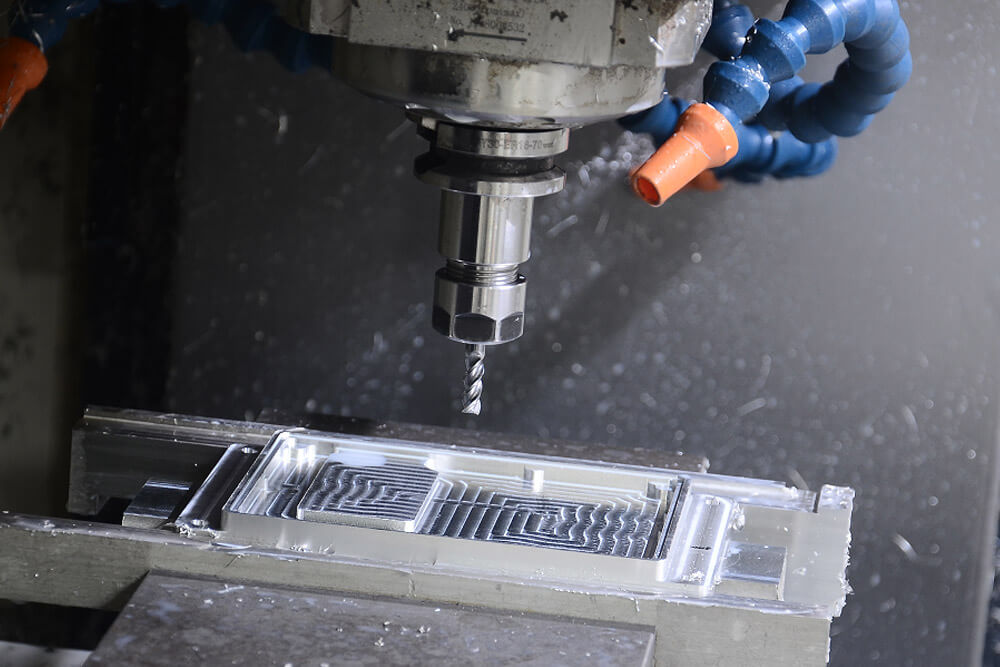
3-axis milling
Aria reviews tool access and critical features before choosing the milling setup.
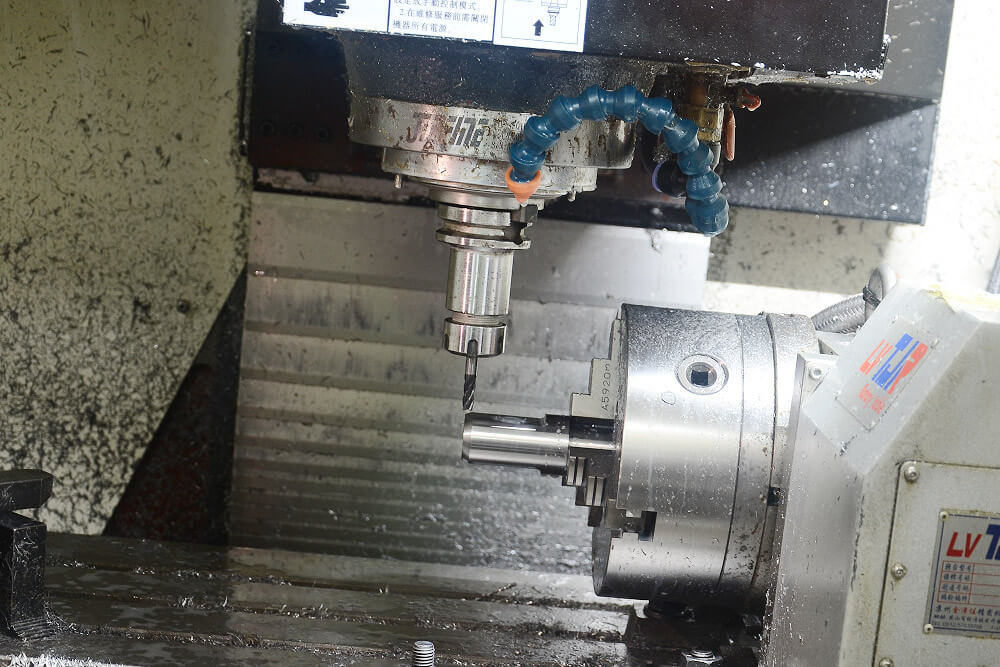
4-axis milling
Review rotary access, setup changes and the relationship between machined faces with Aria.
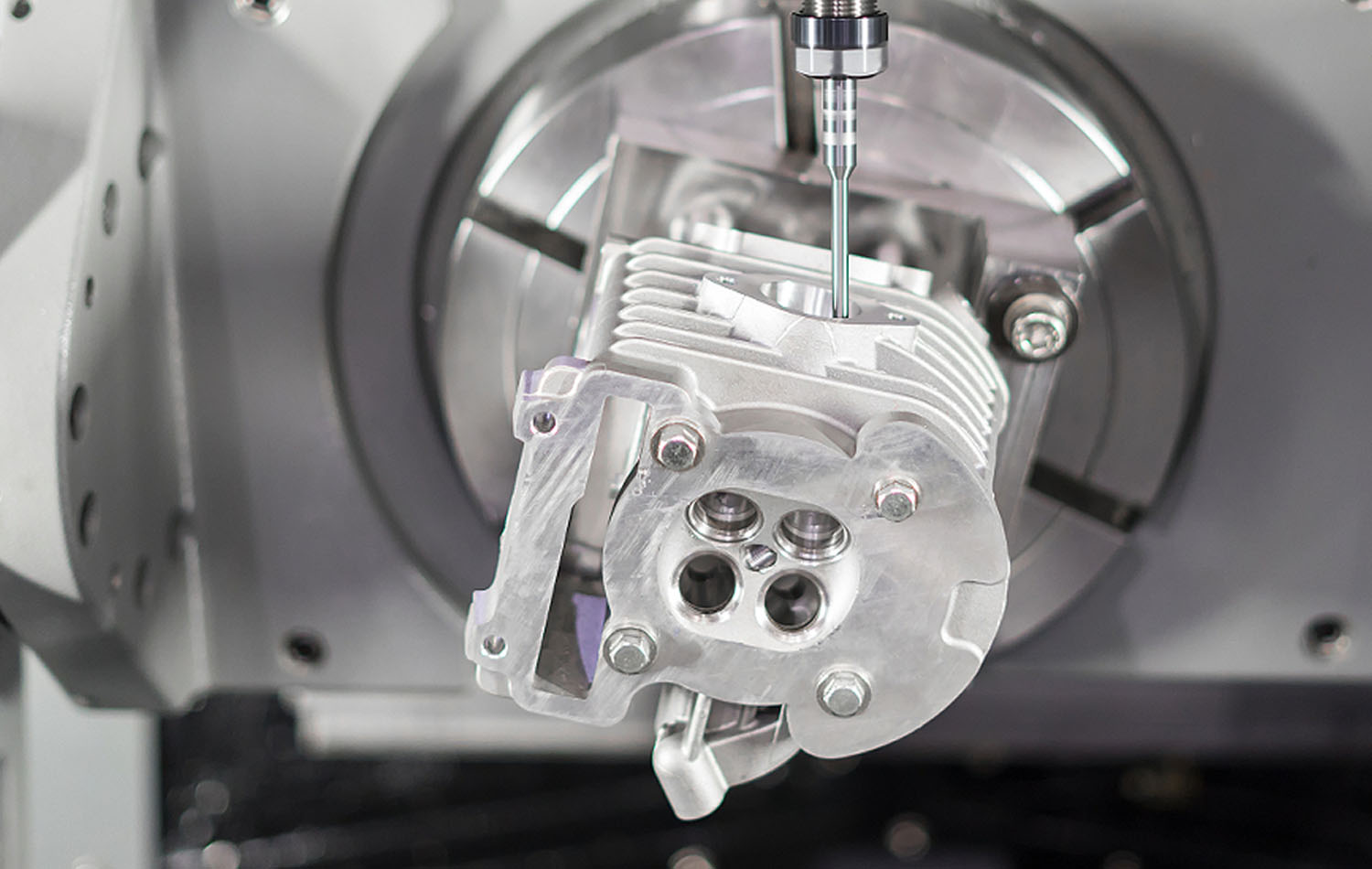
5-axis milling
Discuss angled faces, deep features and inspection requirements directly with Aria’s CNC team.
CNC milling process ranges
| Parameter | Range | Conditions |
|---|---|---|
| Maximum part size | 4000 × 1500 × 600 mm | Confirm the drawing, material, geometry and inspection requirements during quotation. |
| Minimum part size | 5 × 5 × 5 mm | Confirm the drawing, material, geometry and inspection requirements during quotation. |
| Minimum metal wall | 0.8 mm | Confirm the drawing, material, geometry and inspection requirements during quotation. |
| Minimum plastic wall | 1.5 mm | Confirm the drawing, material, geometry and inspection requirements during quotation. |
| Precision feature capability | 0.01 mm | Feature-specific capability; not a blanket general tolerance. Specify critical features on the drawing. |
| As-machined roughness | Ra 1.6 μm or better | Depends on material, geometry and cutter access. |
| Minimum quantity | 1 part | Tooling and setup affect the quotation. |
| Fastest CNC milling production | 3 days | Subject to part review and the quoted schedule. |
Tolerance for CNC Milling Services
| Limits for nominal size | Metals (ISO 2768- f) | Plastics (ISO 2768- m) |
|---|---|---|
| 0.5mm* to 3mm | ±0.05mm | ±0.1mm |
| Over 3mm to 6mm | ±0.05mm | ±0.1mm |
| Over 6mm to 30mm | ±0.1mm | ±0.2mm |
| Over 30mm to 120mm | ±0.15mm | ±0.3mm |
| Over 120mm to 400mm | ±0.2mm | ±0.5mm |
| Over 400mm to 1000mm | ±0.4mm | ±0.8mm |
| Over 1000mm to 2000mm | ±0.5mm | ±1.2mm |
Planning your cnc milling order
- Available axes
In-house 3-axis, 4-axis and 5-axis CNC machines.
Advantages and considerations
Advantages
Milling can create pockets, contours and hole patterns in a range of stock materials. The same model can support prototype iterations without a dedicated production mold.
Considerations
Cutter access limits deep narrow features and sharp internal corners. Complex workholding, additional setups and large volumes of removed stock add time and cost.
Manufacturing process
01
Review the part files
Use the model and drawing to define the part geometry, material and critical dimensions.
02
Plan the toolpaths
Plan the cutting sequence and tool movements for the specified features.
03
Prepare the machining setup
Secure the stock and set the cutting tools for the required machining operations.
04
Mill the features
Machine the pockets, holes and contours, changing tools or setups where the geometry requires it.
05
Finish the surfaces
Complete the specified surface finishing, such as polishing, where required for the part.
Design considerations
Critical milled dimensions
Identify locating faces, hole positions and mating features on the drawing. Feature-specific requirements give programming and inspection a clearer target than one tight tolerance applied everywhere.
Machining engineering plastics
Machined plastic parts can support fit checks and functional prototypes in a specified stock grade. Account for flexibility, heat and moisture response when defining close-fitting features.
Select a metal grade for the part’s loads, corrosion exposure and subsequent finishing.
Frequently asked questions
What is CNC machining?+
A: CNC machining is a wide-ranging manufacturing category involving multiple computer-managed processes. The objective is to remove enough raw material from a piece to achieve a state of near completion.
What is the difference between the subtractive and additive manufacturing processes?+
A: CNC machining is a subtractive manufacturing process. When the material is added instead of removed, it’s called an additive manufacturing process. Examples of subtractive CNC machining include specialized applications such as CNC milling services, turning, surface grinding, and EDM. An example of additive CNC machining is 3D printing.
What kind of finish does CNC machining have?+
A: The spinning motion from the CNC machine’s cutter will leave visible tool marks. Although they stand ready for immediate service, they can be further refined with anodizing, painting, polishing, and plating. Aria supply online cnc machining service, Get Your Free Quote About cnc machined parts Today. Get CNC Milling Quotes Online All information and uploads are secure and confidential.
Why choose CNC machined parts by Aria?+
A: Aria is a professional CNC machining manufacturer in China, The reliability and precision of high-tech tools powered by sophisticated software programs give CNC machining the ability to quickly generate prototypes and complicated end-use parts having exceptionally tight tolerances. with low cnc machining costs from Chinese.
Start a project
Get a quote for your parts
Upload your CAD files and tell us the material and quantity you need.
Talk to an engineer