












Black Oxide

Chemical treatment that gives compatible metal parts a black surface.

Black Oxide
  • Anker SOLIX
  • eufy
  • soundcore
  • PLAUD
  • xTool
  • Ulike
  • Jackery
  • Roborock
  • DREAME
  • EcoFlow
  • Insta360
  • TCL
  • Beatbot
  • CASETiFY
  • Creality
  • Shokz
  • SEGWAY
  • realme

Overview

Black oxide is also an oxide film. Mainly used to increase the corrosion resistance and appearance of the product, and to minimize light reflection. Suitable for surface treatment of steel and stainless steel products.

Finish specifications

PropertyDetails
ColorsBlack

Advantages and considerations

Surface & substrate

Advantages

Pros
Better Protection Against Corrosion: A significant upside of the black oxide finish is its superior corrosion resistance and enhanced durability. It forms a defensive layer, giving your metal components the resilience they need to resist wear and tear over time. Additionally, black oxide finish provides mild corrosion resistance, which is much better after sealing than on bare steel alone and is sufficient for many applications. Reduced Light Reflection: Black oxide is your best bet if you want a non-reflective surface. It’s ideal for optical devices or other applications where glare can be a nuisance. Dimensional Stability: The black oxide process doesn’t alter the dimensions of your metal part, as the coating is ultra-thin with minimal buildup. The coating thickness is typically between one to two micrometres, so part dimensions stay consistent and tight tolerances are maintained. Aesthetic Appeal: The sleek, dark finish of black oxide gives your metal parts a polished, professional look. Primer for Additional Finishes: Black oxide acts as an excellent primer if you want to add other surface finishes on to your part, and if you’re wondering whether black oxide coating expensive is a fair concern, the answer is generally no because it is usually more affordable than electroplating, powder coating, and painting.
Surface & substrate

Considerations

Cons
Not as Durable as Other Finishes: Although black oxide offers mild corrosion resistance, it doesn’t perform as well as some other finishes, like galvanization, and without a sealer it can protect little more than a bare steel part. Damaged black oxide coatings can also be difficult to repair. Requires Additional Sealing: Black oxide often needs an oil or wax finish to get the best out of its corrosion resistance, and sometimes a lacquer finish is used for demanding environments. This means an extra step in your process. Not Suitable for High-Temperature Applications:It will degrade if exposed to extreme high temperatures. Color Variability:May appear uneven if not properly applied. Limited to Certain Metals: it Works best on steel and iron; less effective on aluminum or non-ferrous metals.

How Aria supports your project

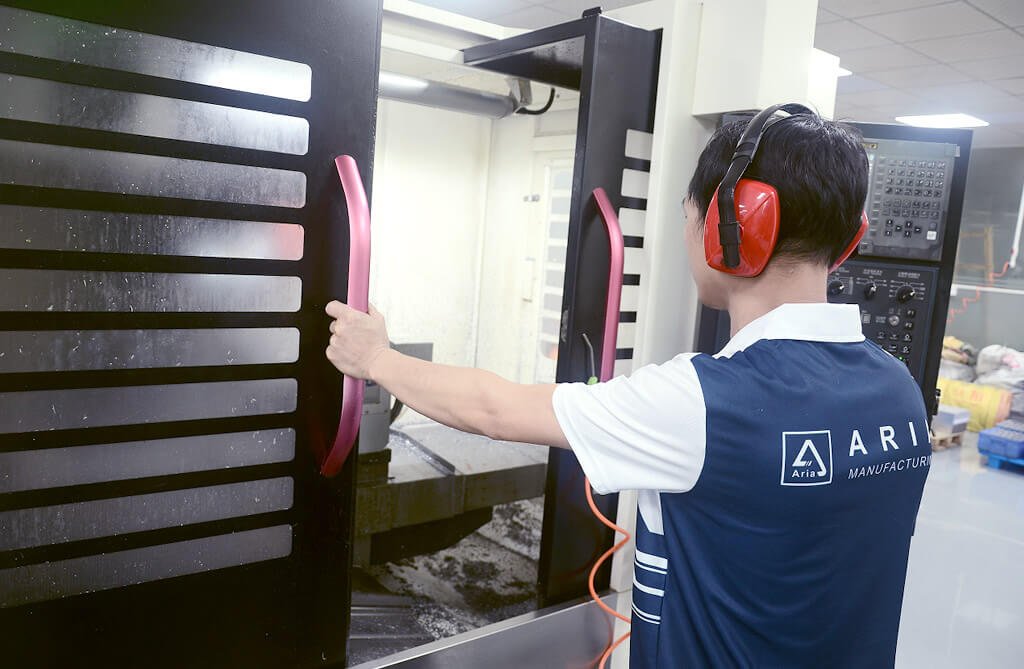
MadeAria operator carrying out in-process quality control
Geometry · access · material

Design feedback before production

We review tool access, geometry and material choice before manufacturing.

Drawing → dimensional checks

Inspection to your drawing

Dimensional checks and inspection reports for the critical features on your drawing.

Tooling → finishing → inspection

A schedule for your order

Tooling, finishing and inspection included in your delivery schedule.

Compatible manufacturing processes

Selection requirements

CNC Milling Services · Precision CNC machining · CNC turning · EDM machining

Finish must also be compatible with the selected base material; allow for preparation, masking and dimensional changes.

Compatible materials

Selection requirements

Carbon Steel

Apply rust protection promptly. Welding may need preheat and an appropriate procedure. Hot-rolled, cold-drawn, normalized and quenched-and-tempered conditions differ; use alloy steel such as 4140 where greater hardenability is required. Other carbon steels include 1018/1020, 1215/12L14 and A36. Black oxide, zinc/nickel/chrome plating, phosphate or zinc-flake coatings, powder coating, painting and protective oil.

Alloy Steel

Confirm heat-treatment hardness before quoting. Welding may need preheat in the supplied 170–350°C reference range and suitable postheat, depending on the procedure. Alternatives include 4340, carburizing grade 8620 and 4130. Quenching/tempering and nitriding; nickel/chrome plating, black oxide, phosphate, paint and zinc-flake corrosion protection.

Mild Steel · Tool Steel

Use the appropriate ferrous-metal treatment and specify supplementary protection for the service environment.

Start a project

Get a quote for your parts

Upload your CAD files and tell us the material and quantity you need.

Talk to an engineer