
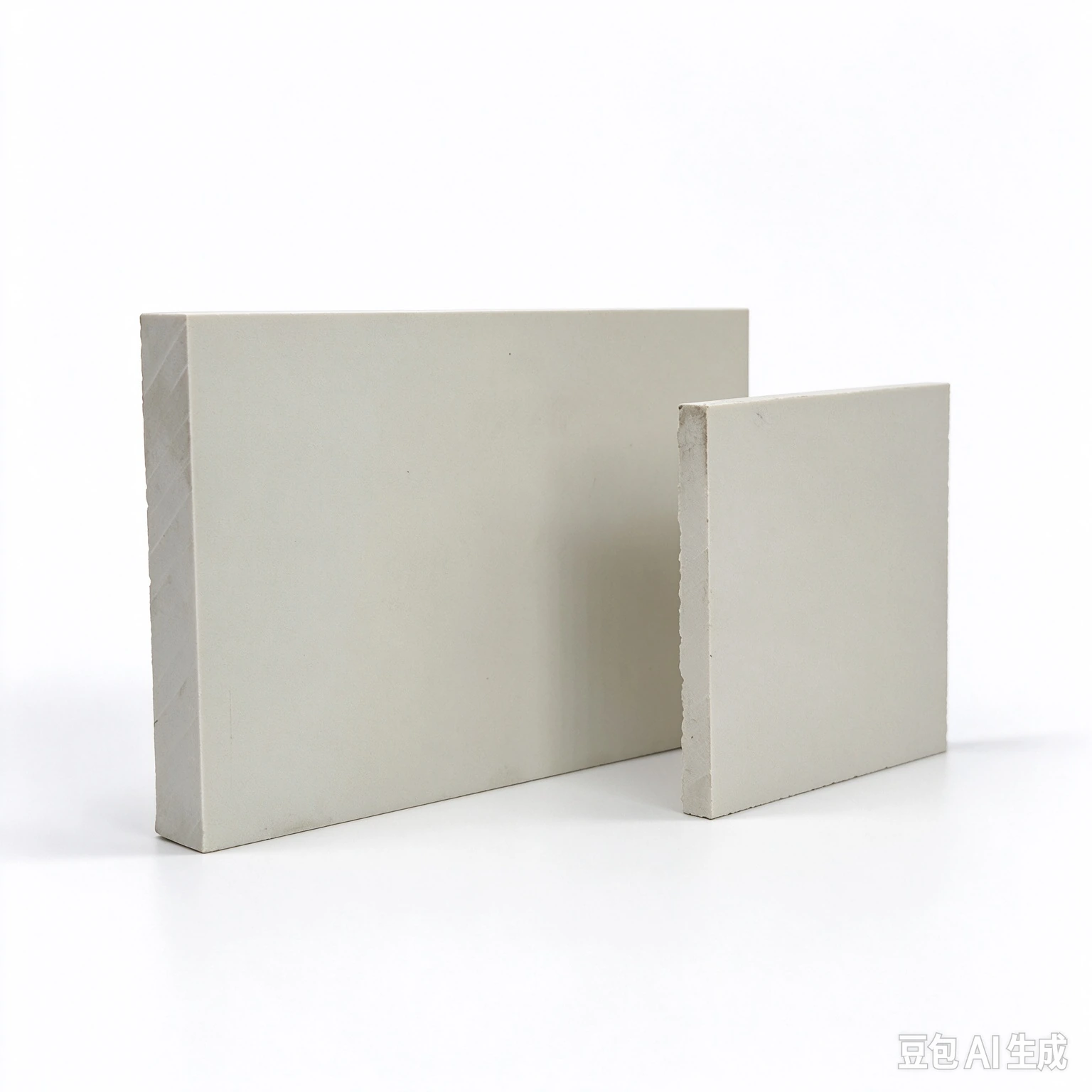
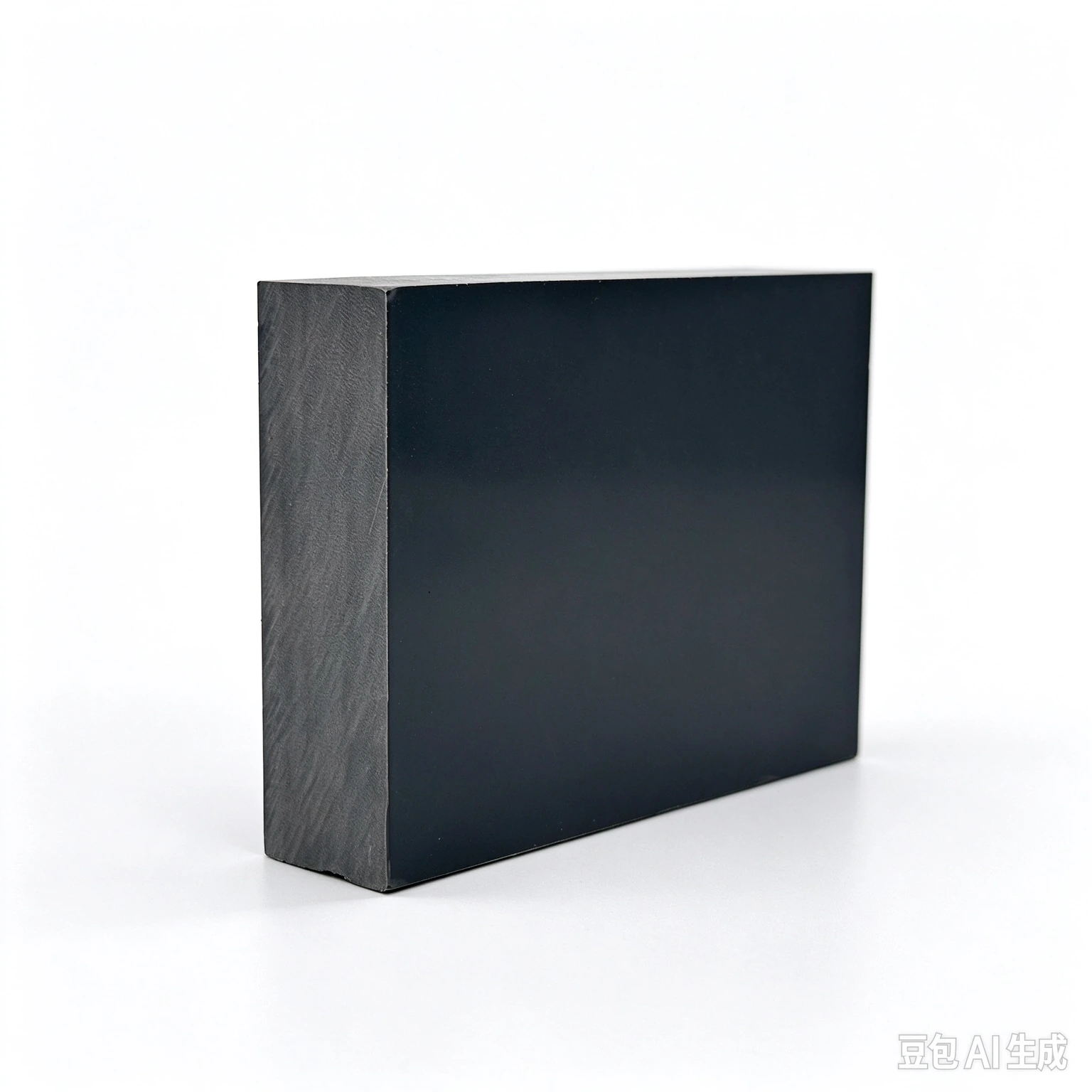
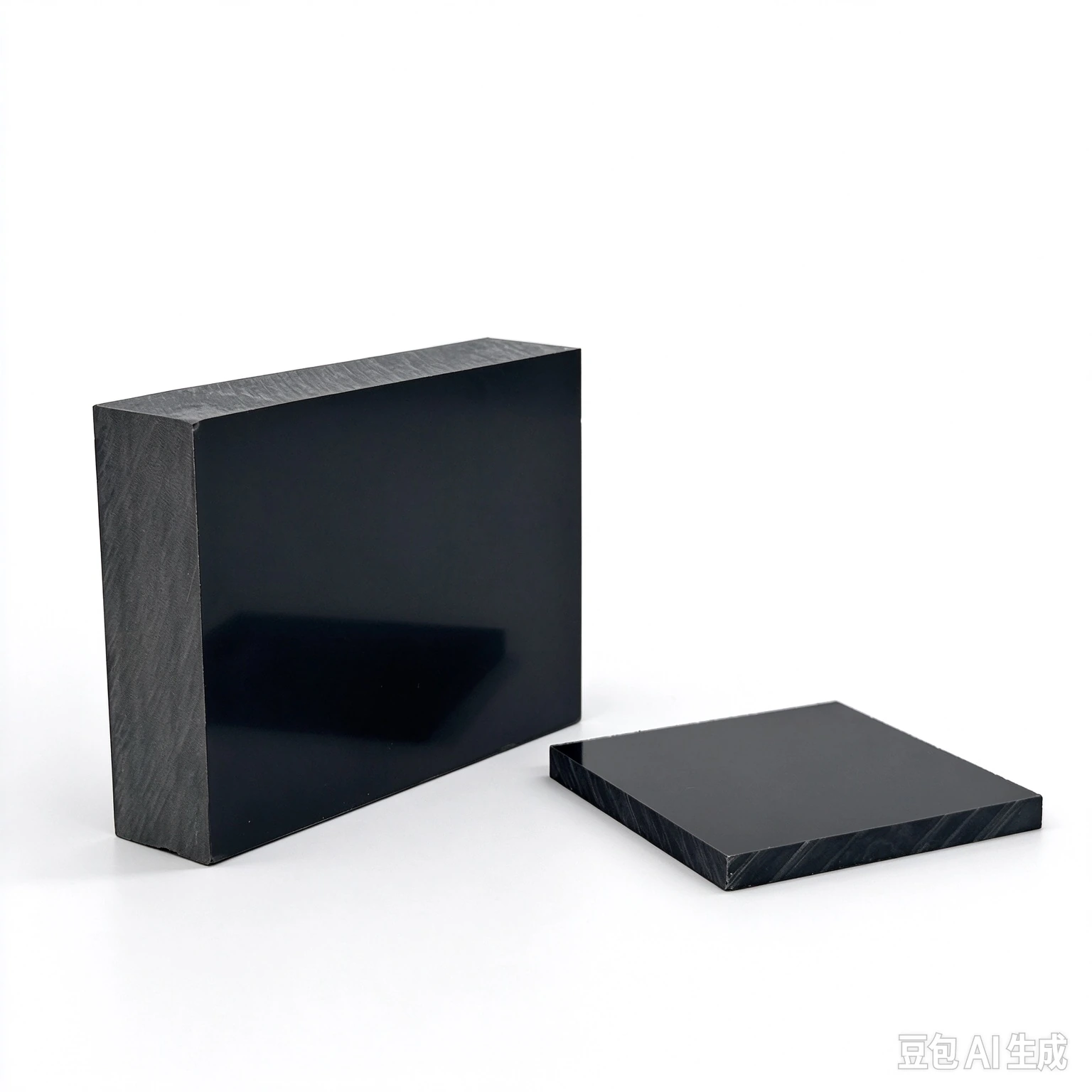
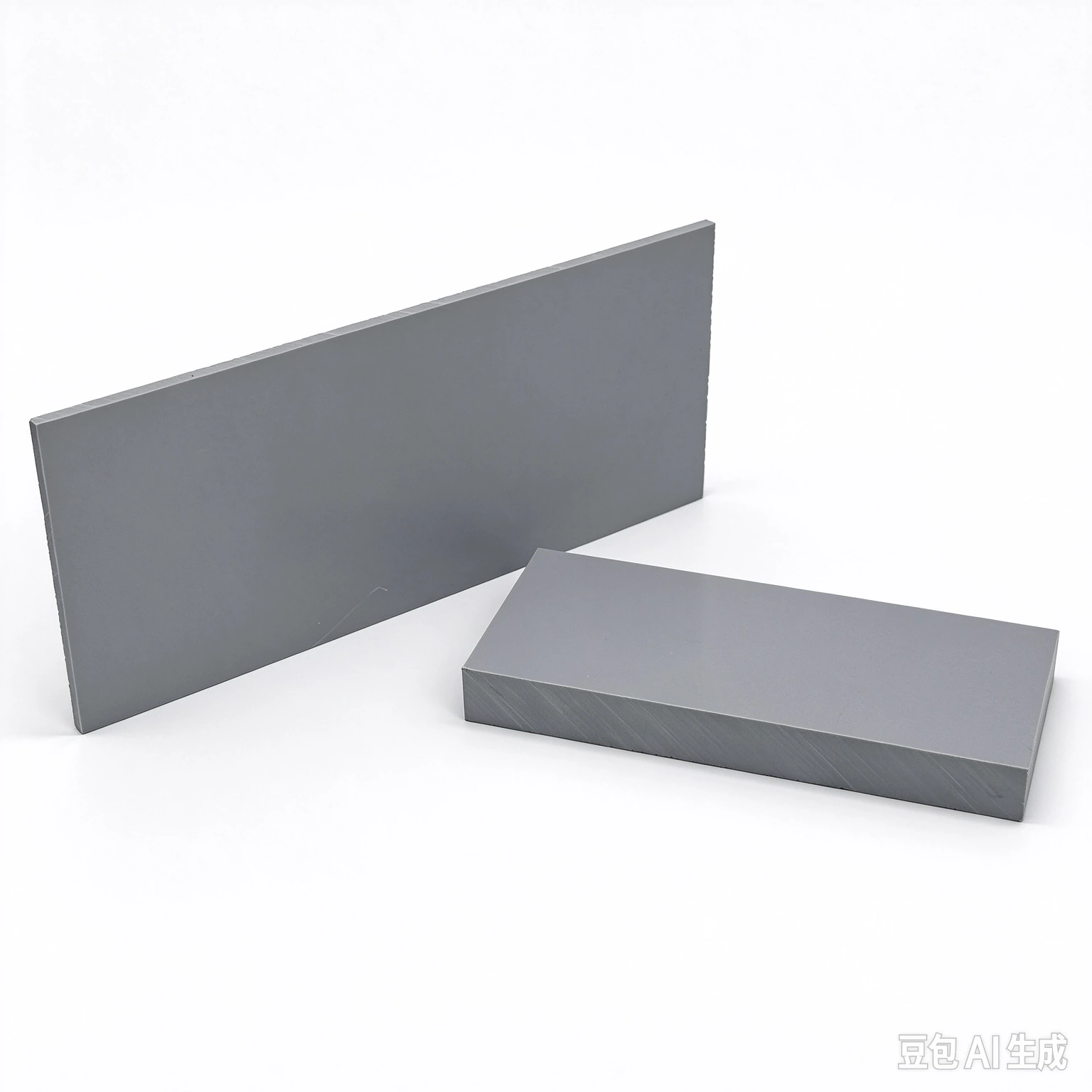
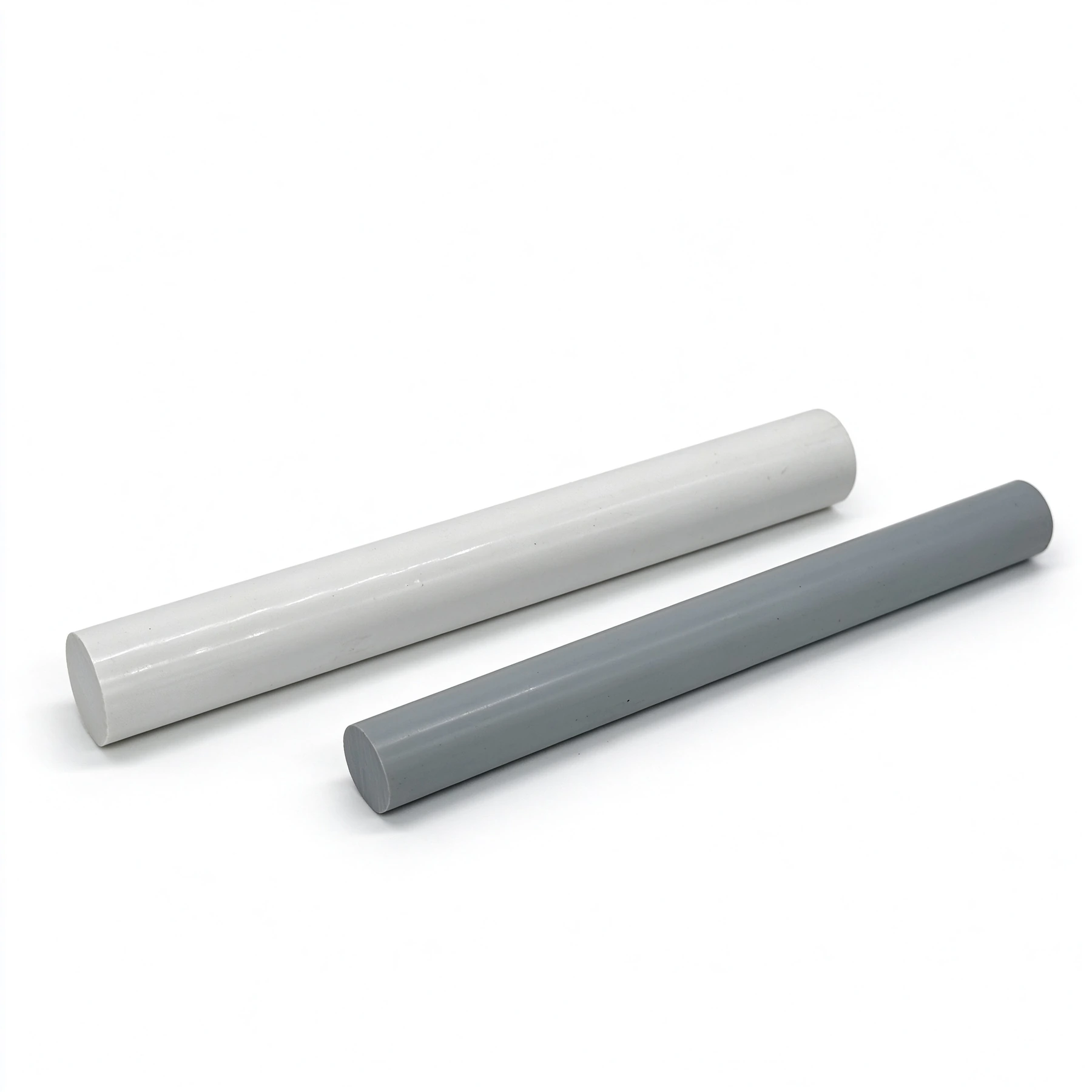
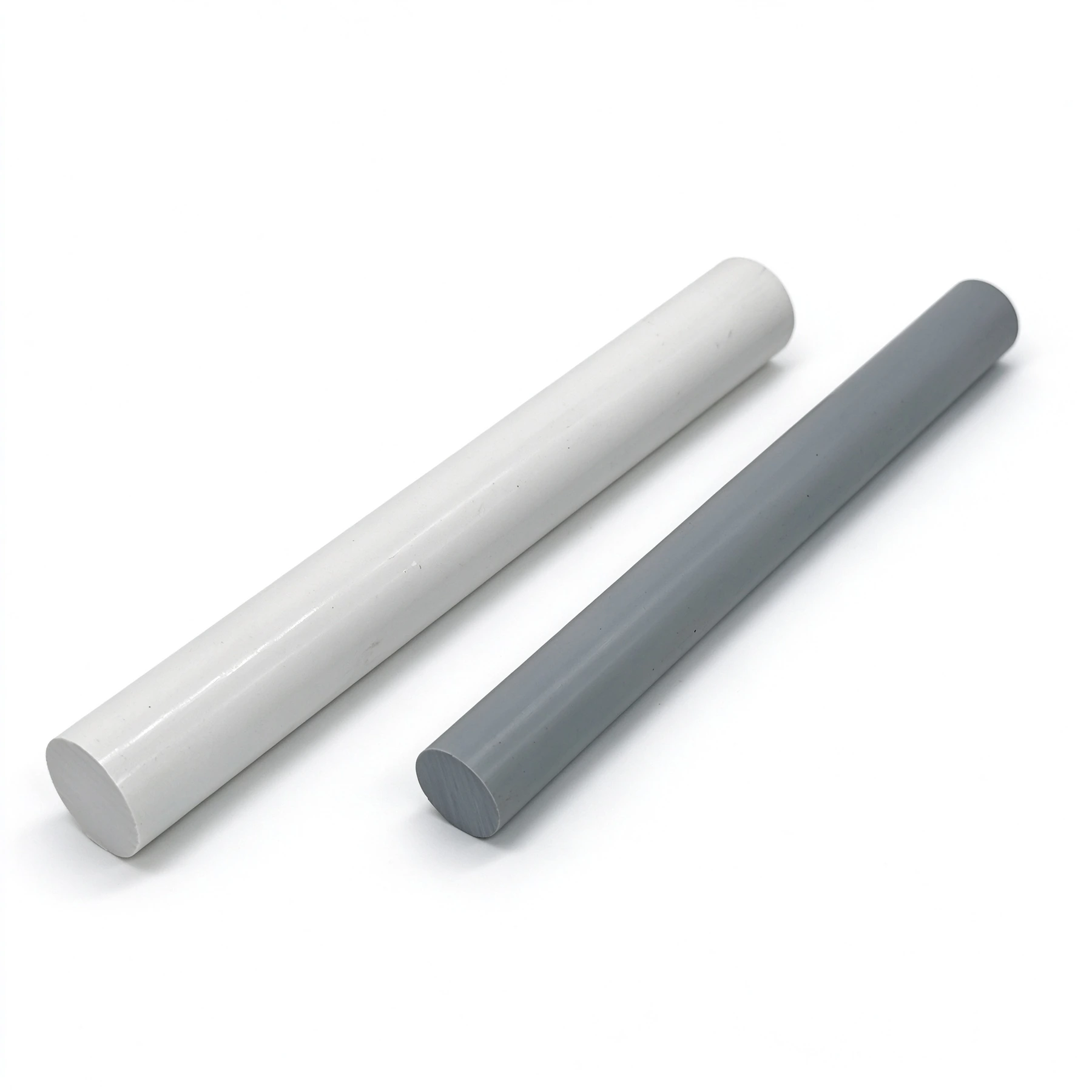
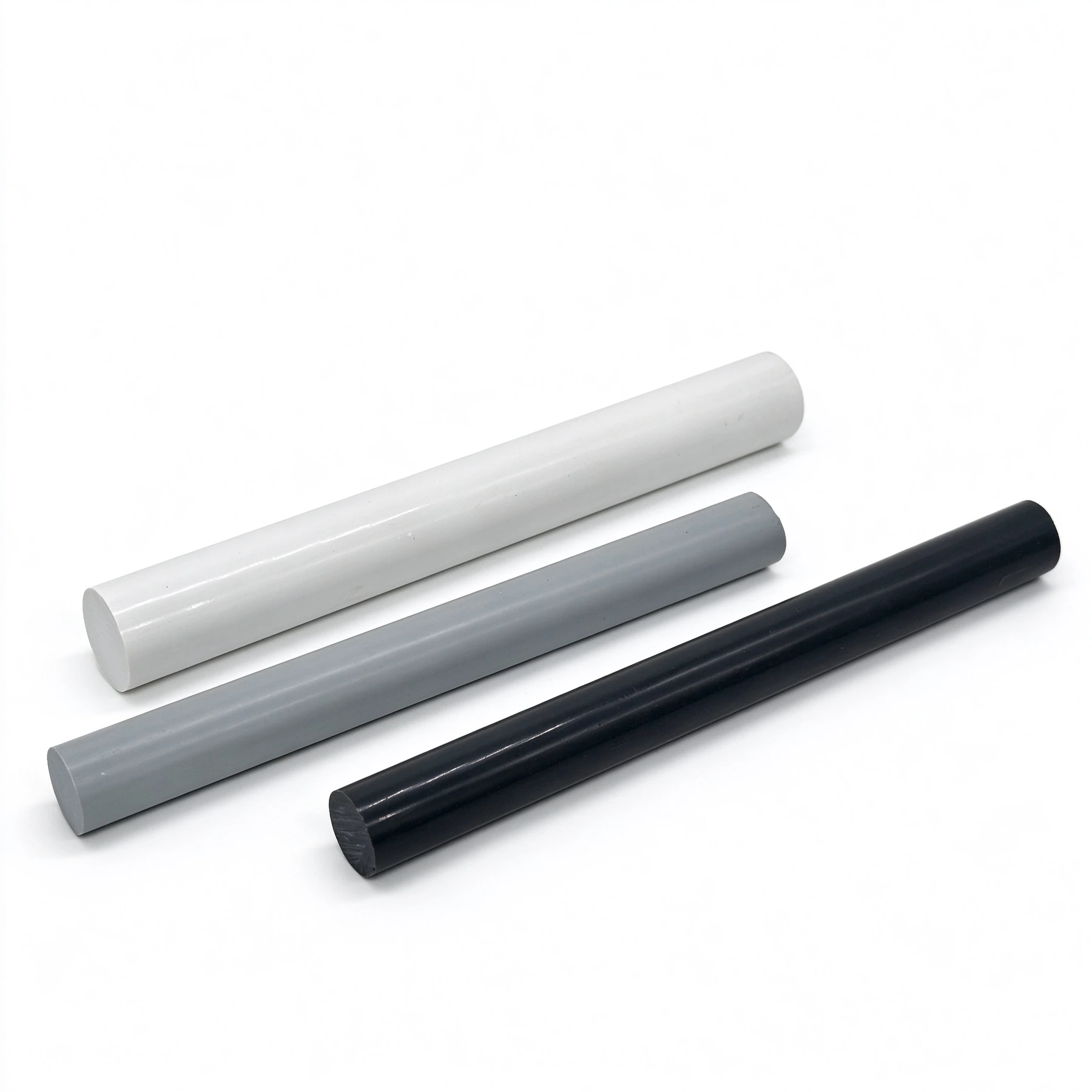
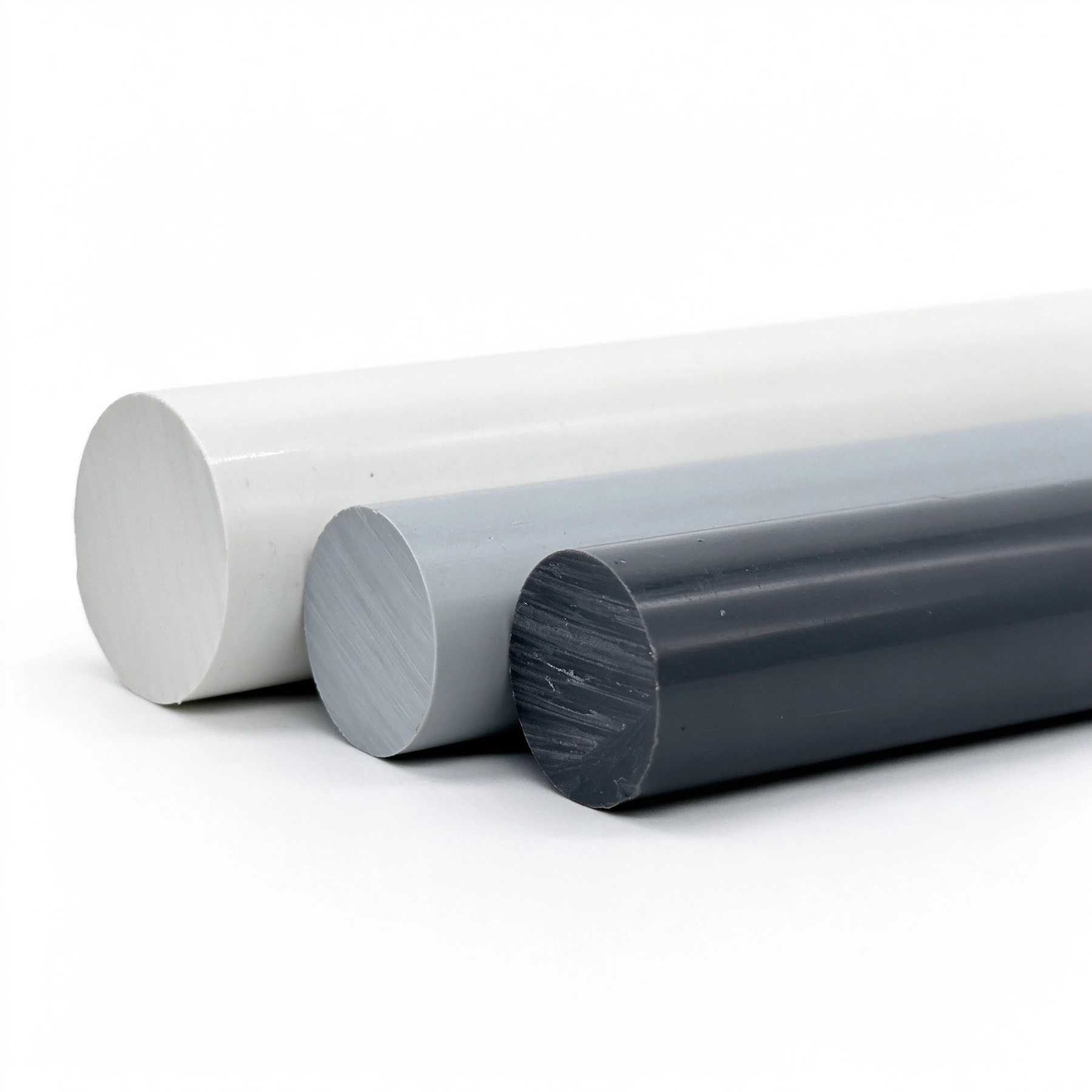
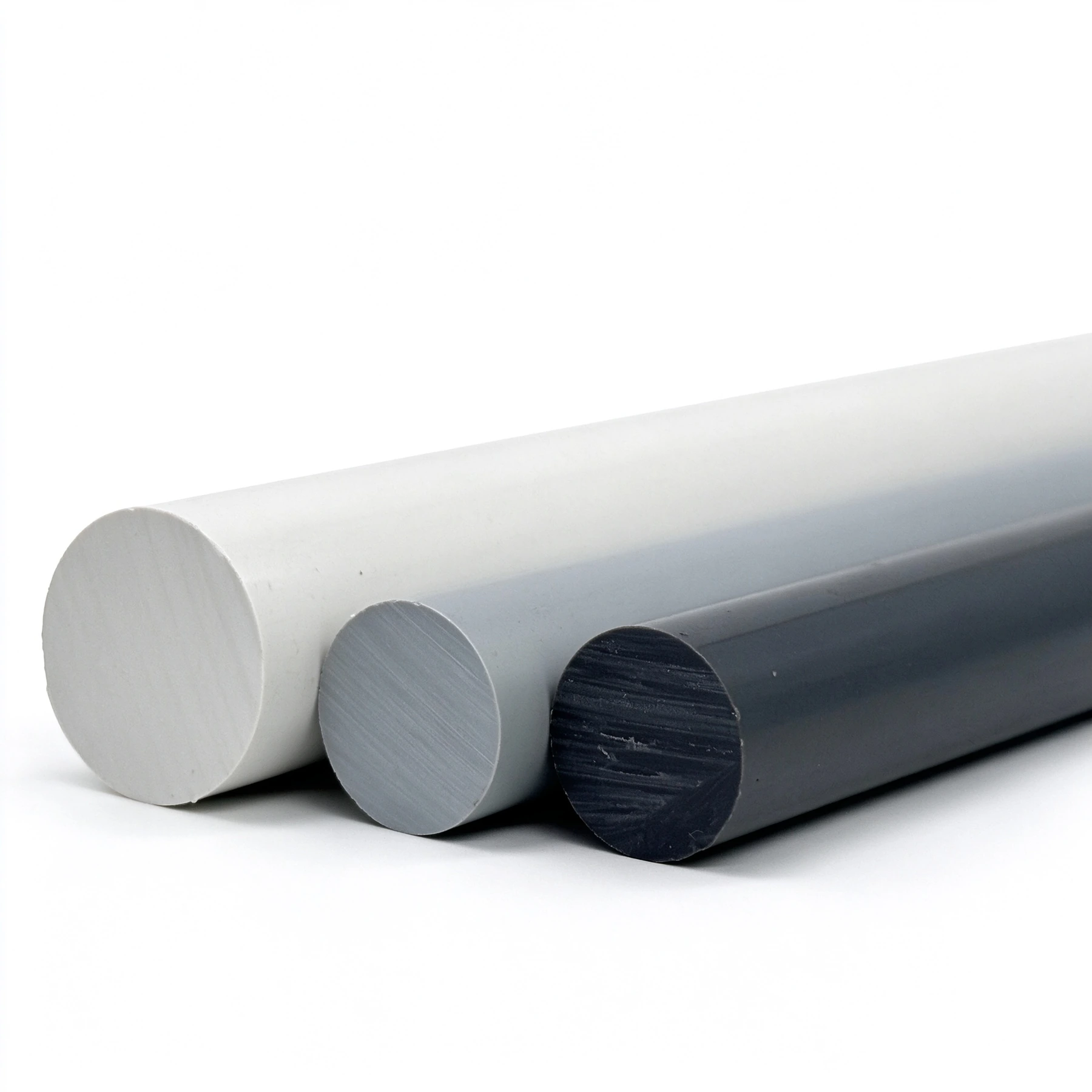
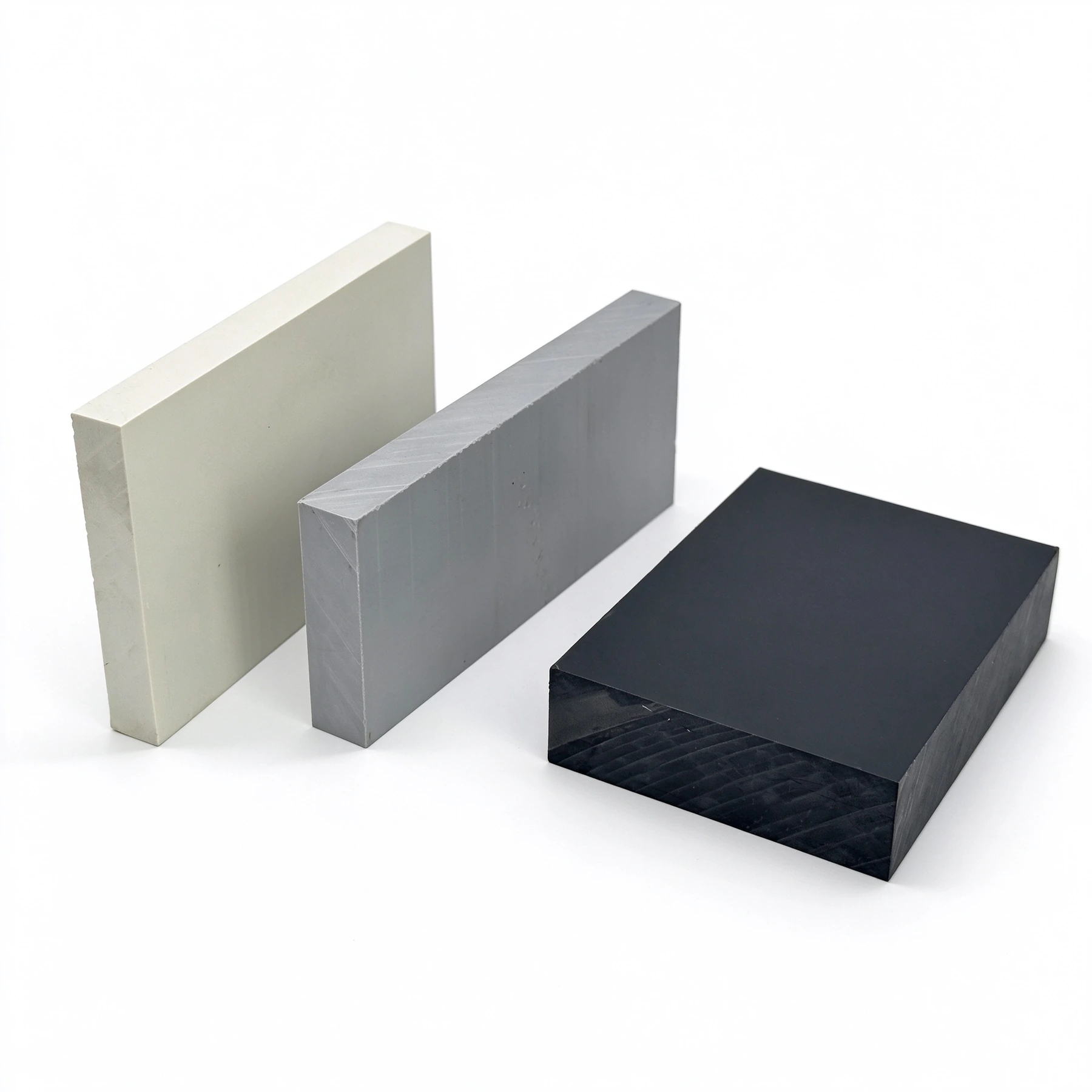
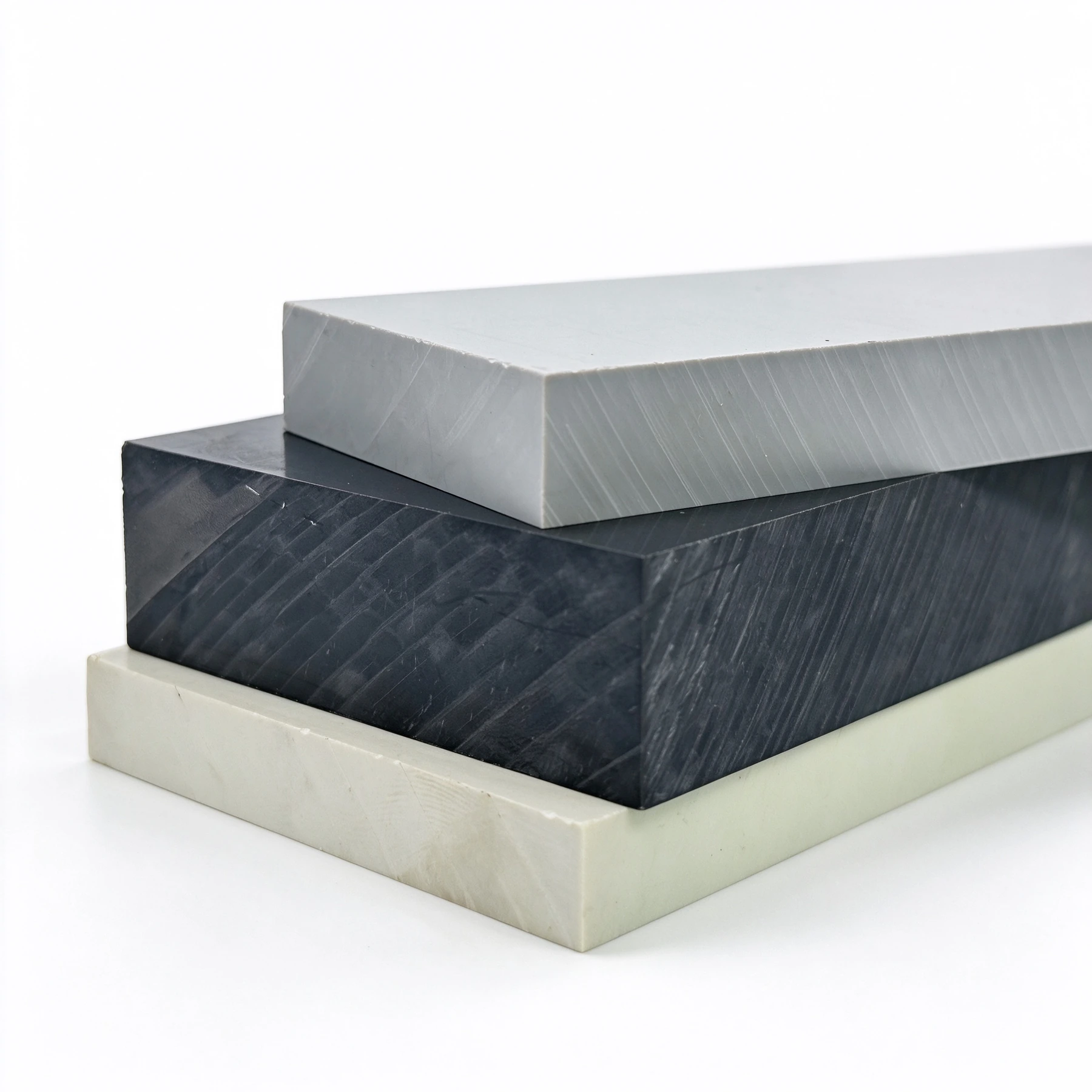
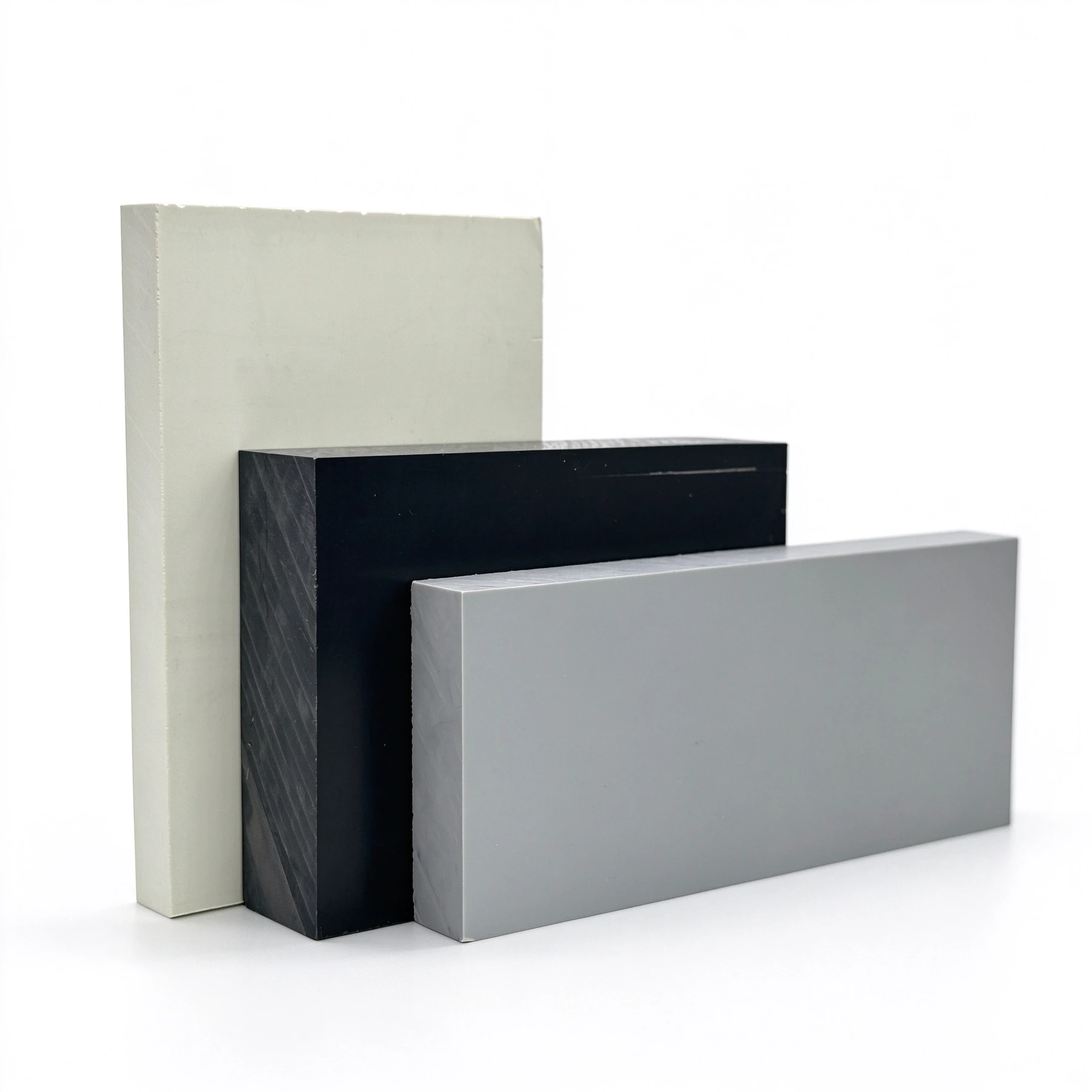
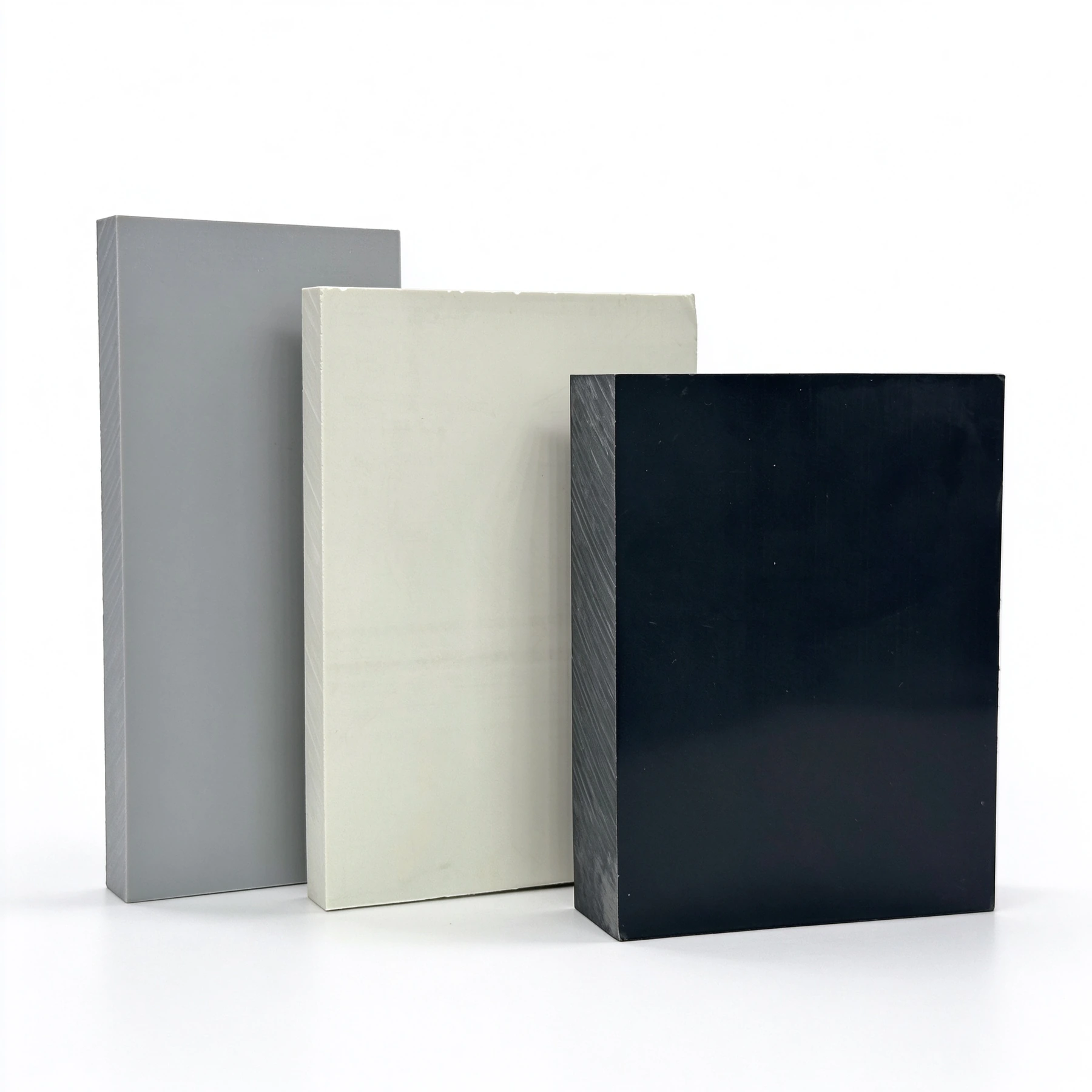
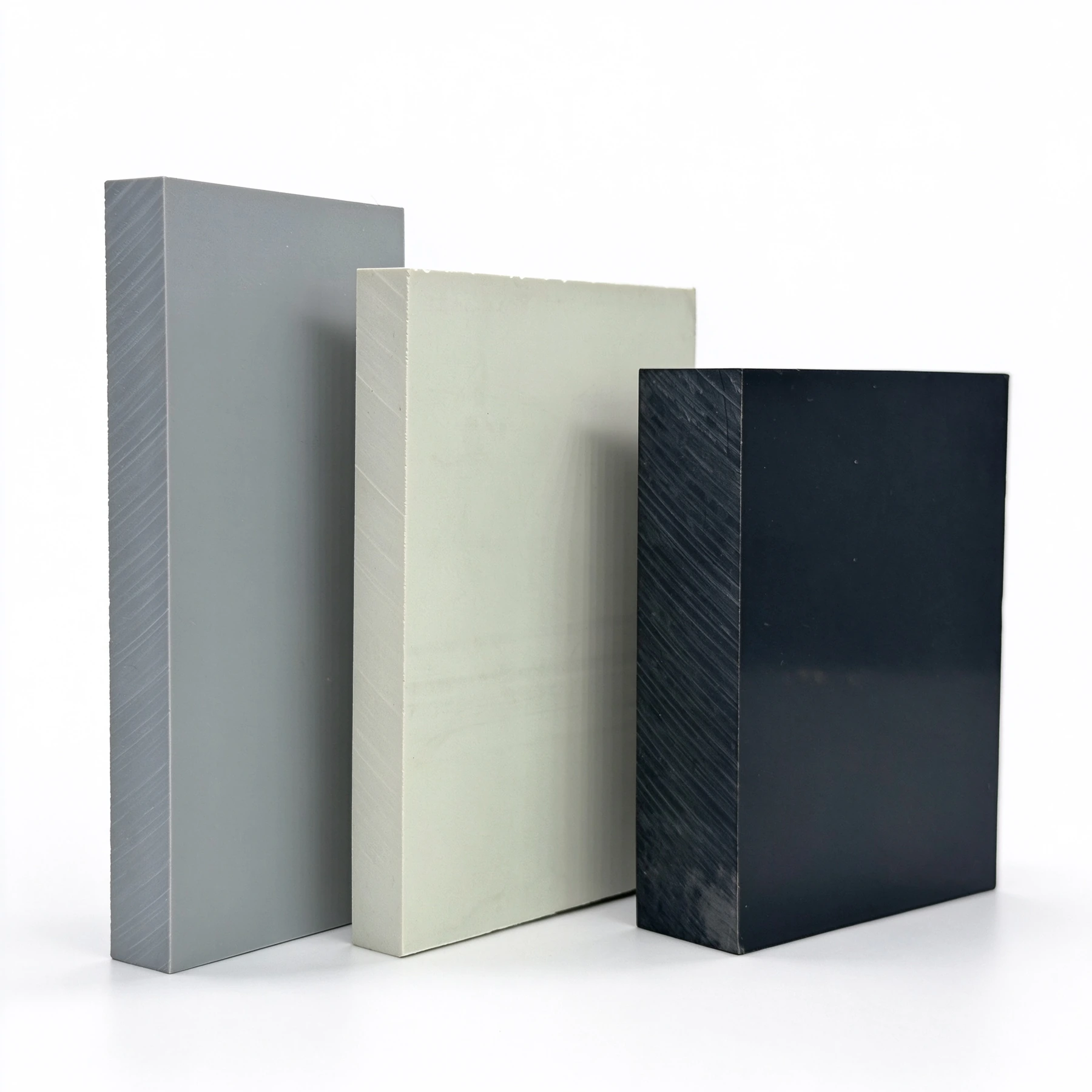
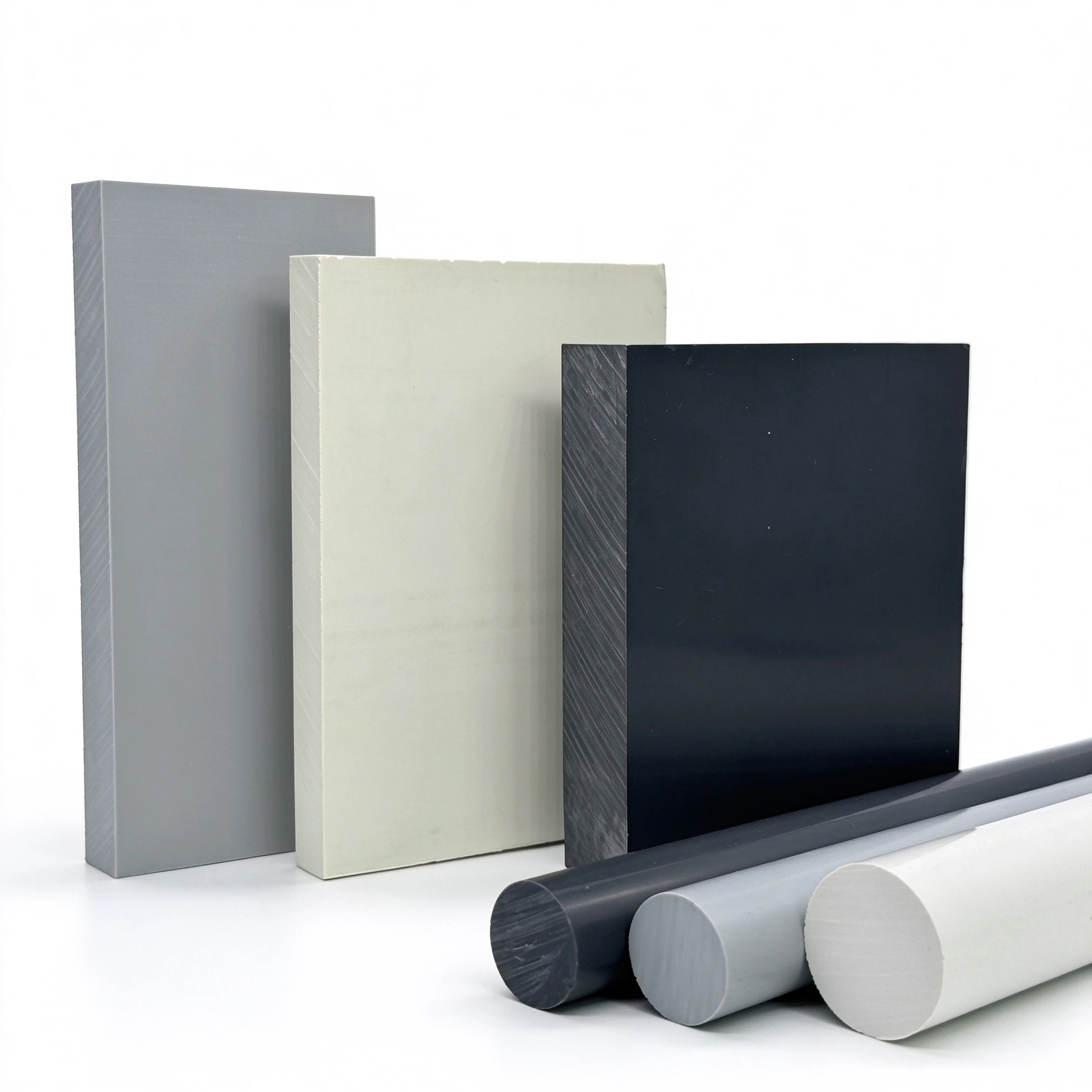
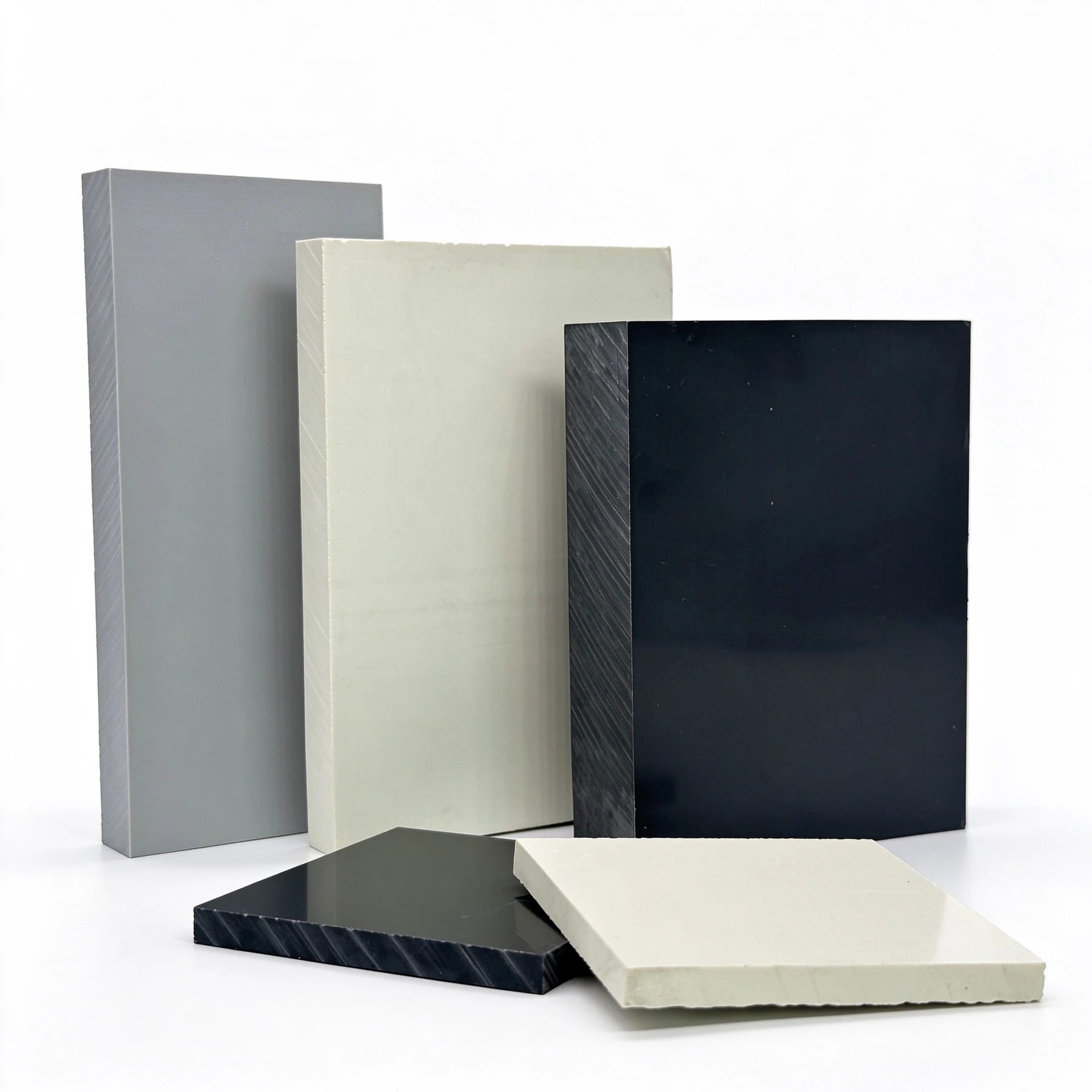
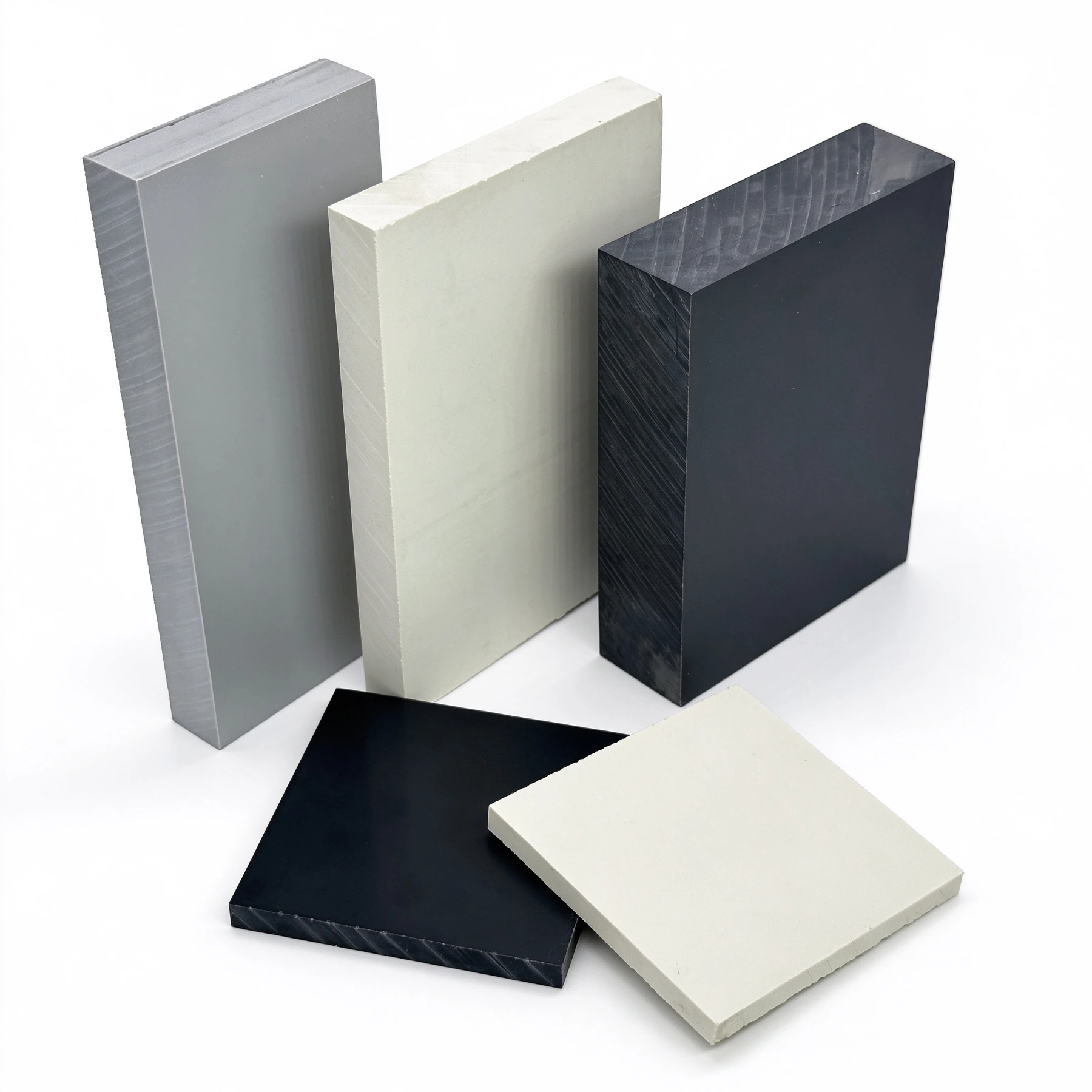
PVC stock — view 01
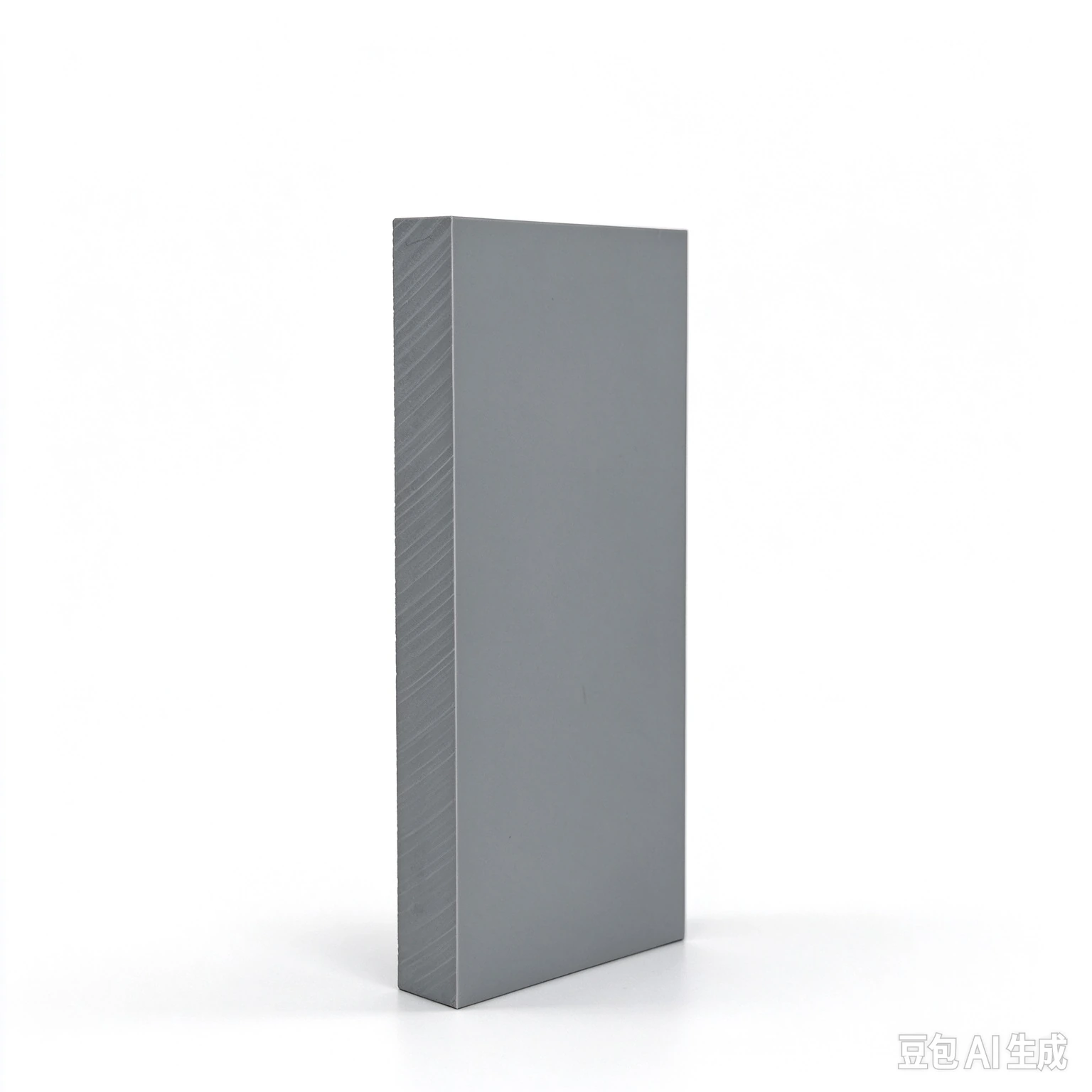
Rigid PVC-U is a chemically resistant, electrically insulating plastic for piping, sheet components and machined parts.


















For a PVC component, share the chemical environment, temperature and any required material documentation with Aria. We help you discuss the grade and manufacturing requirements with the part drawing. Rigid PVC-U and flexible formulations are different material choices, so the intended formulation belongs in the brief.
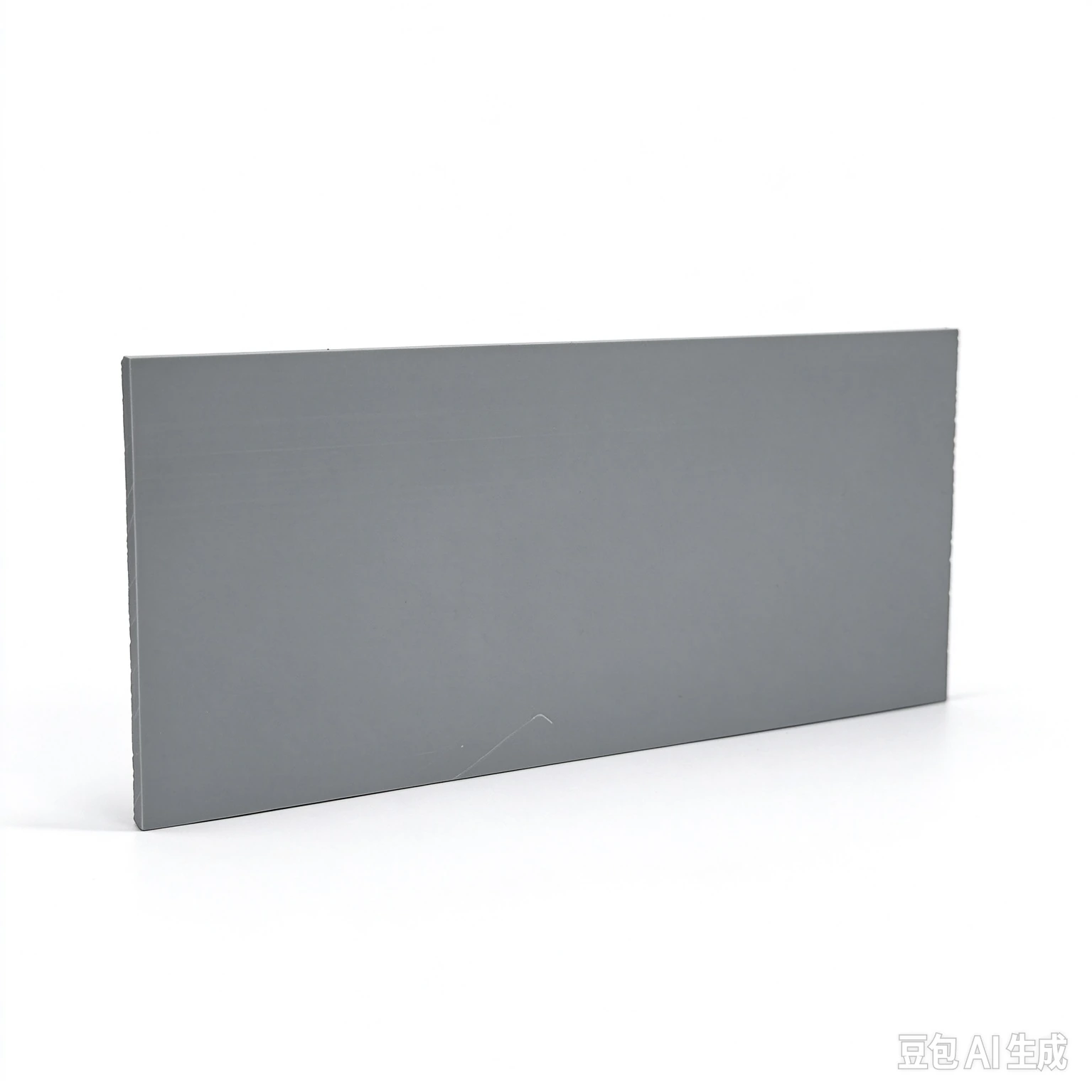
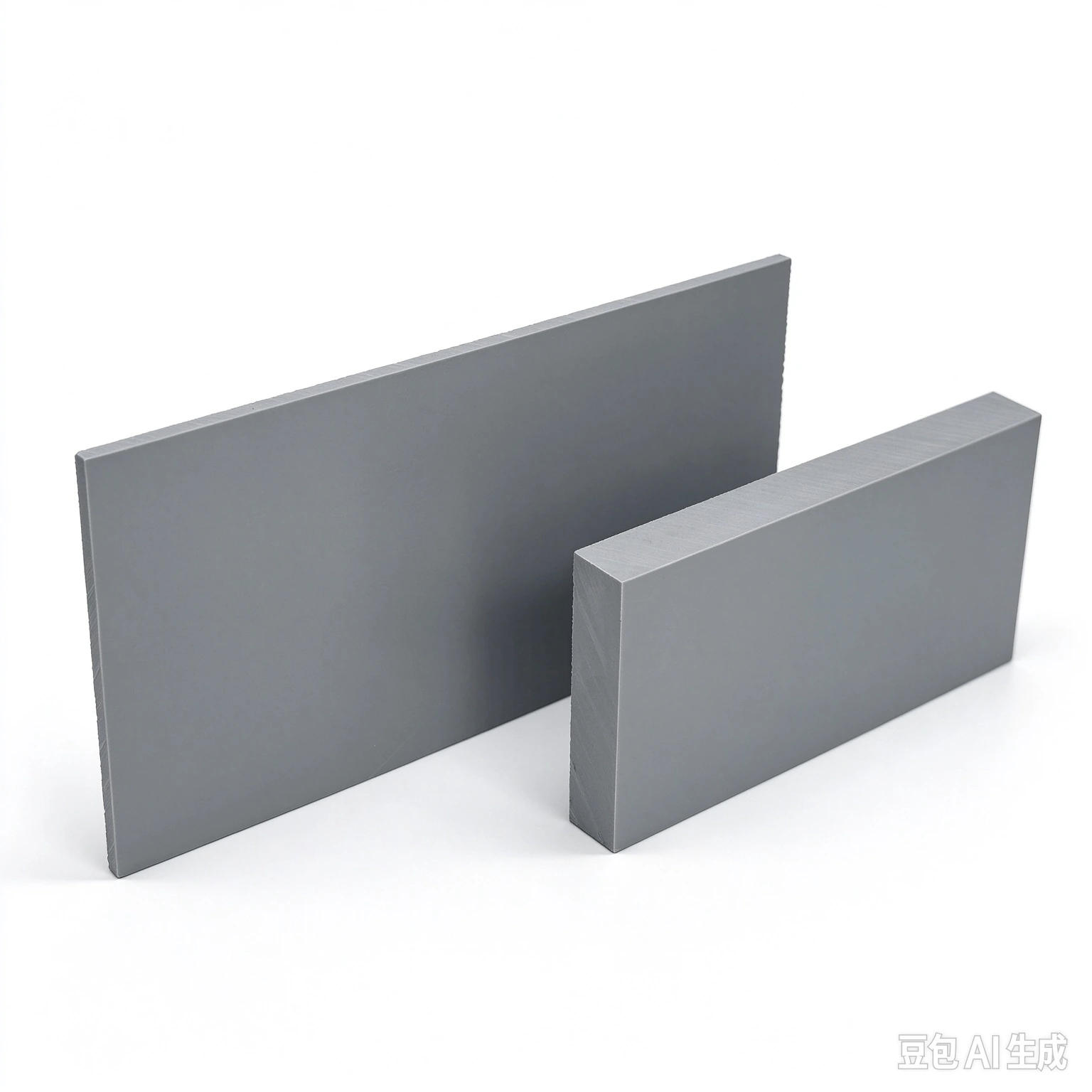
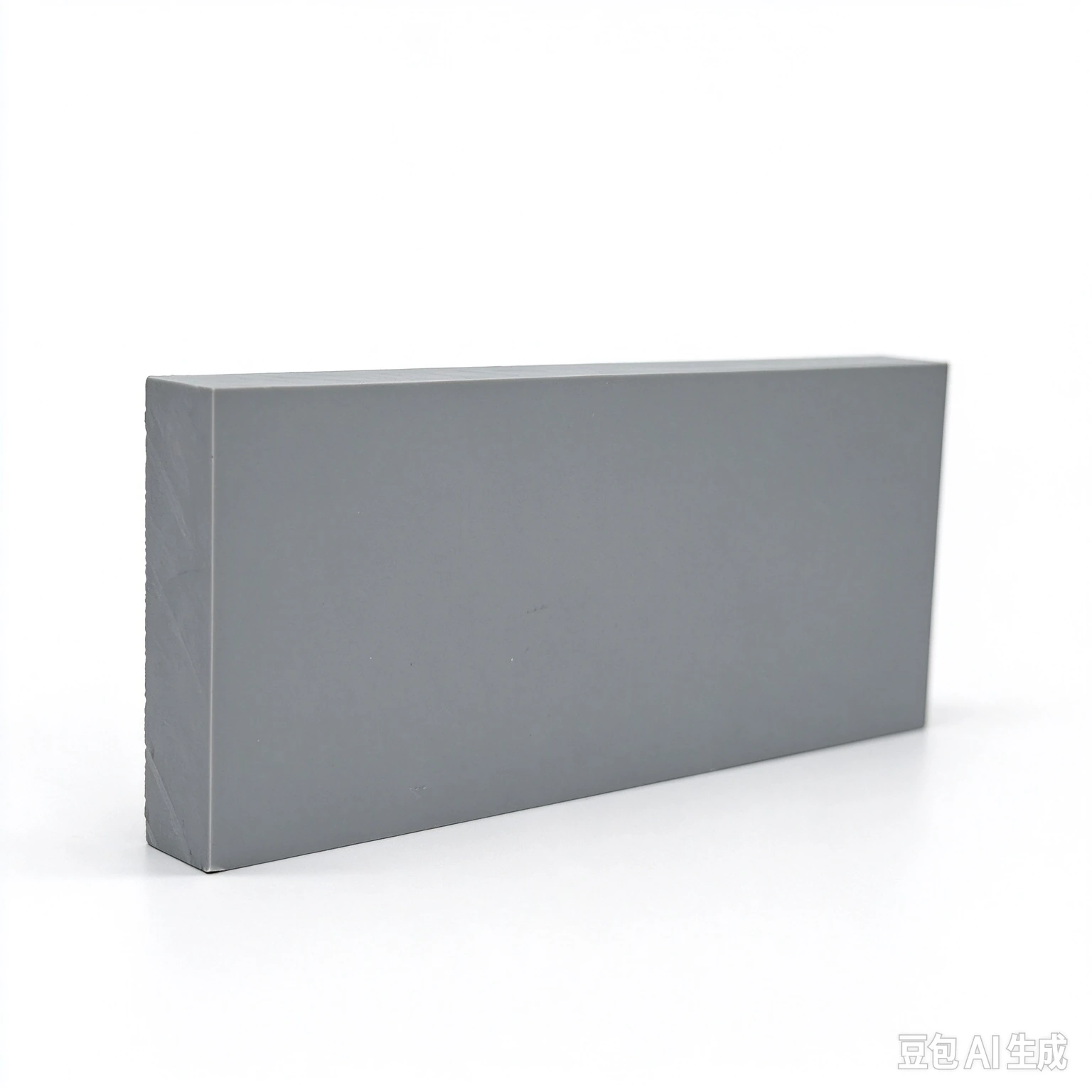
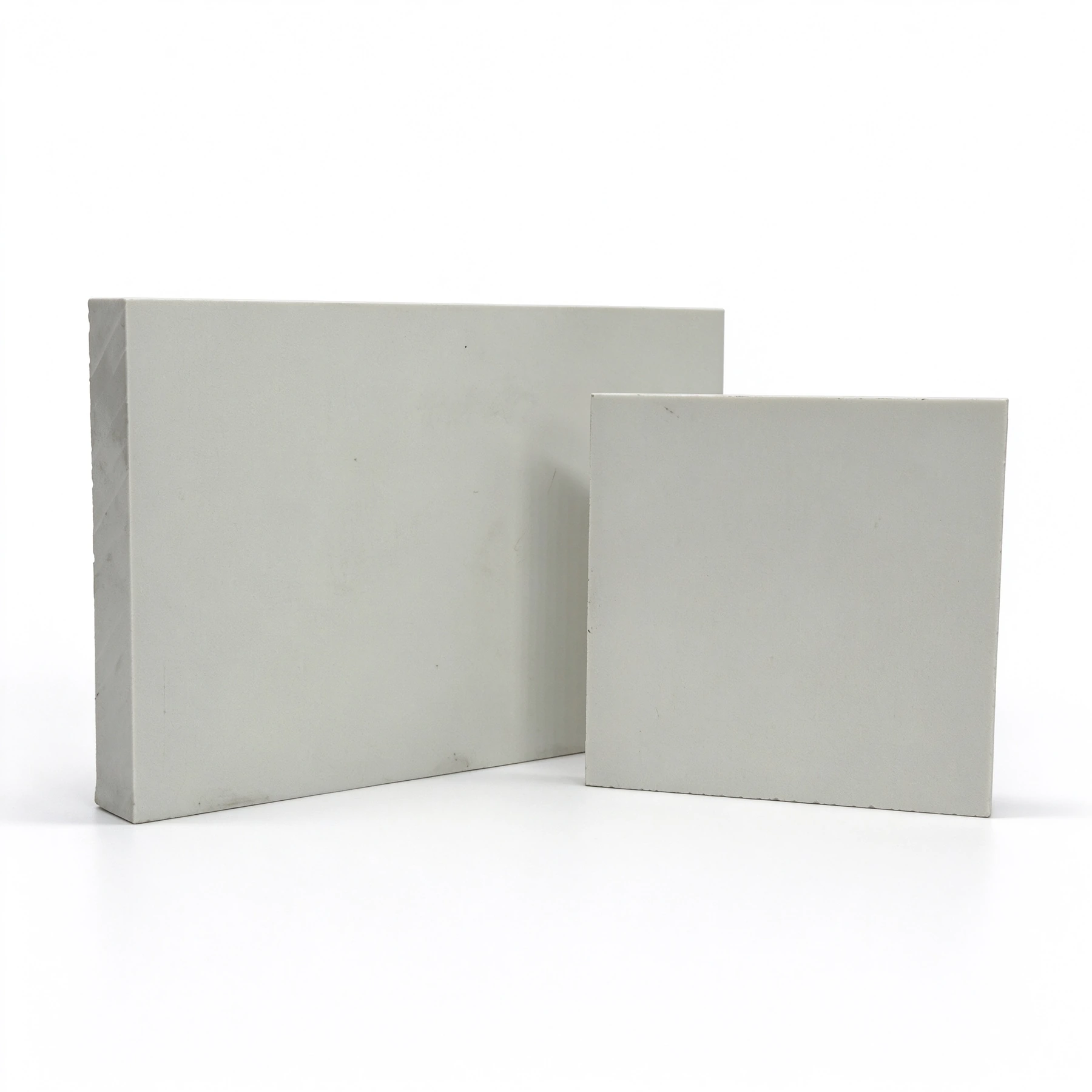
| Property | Details |
|---|---|
| Available variants | PVC Grey |
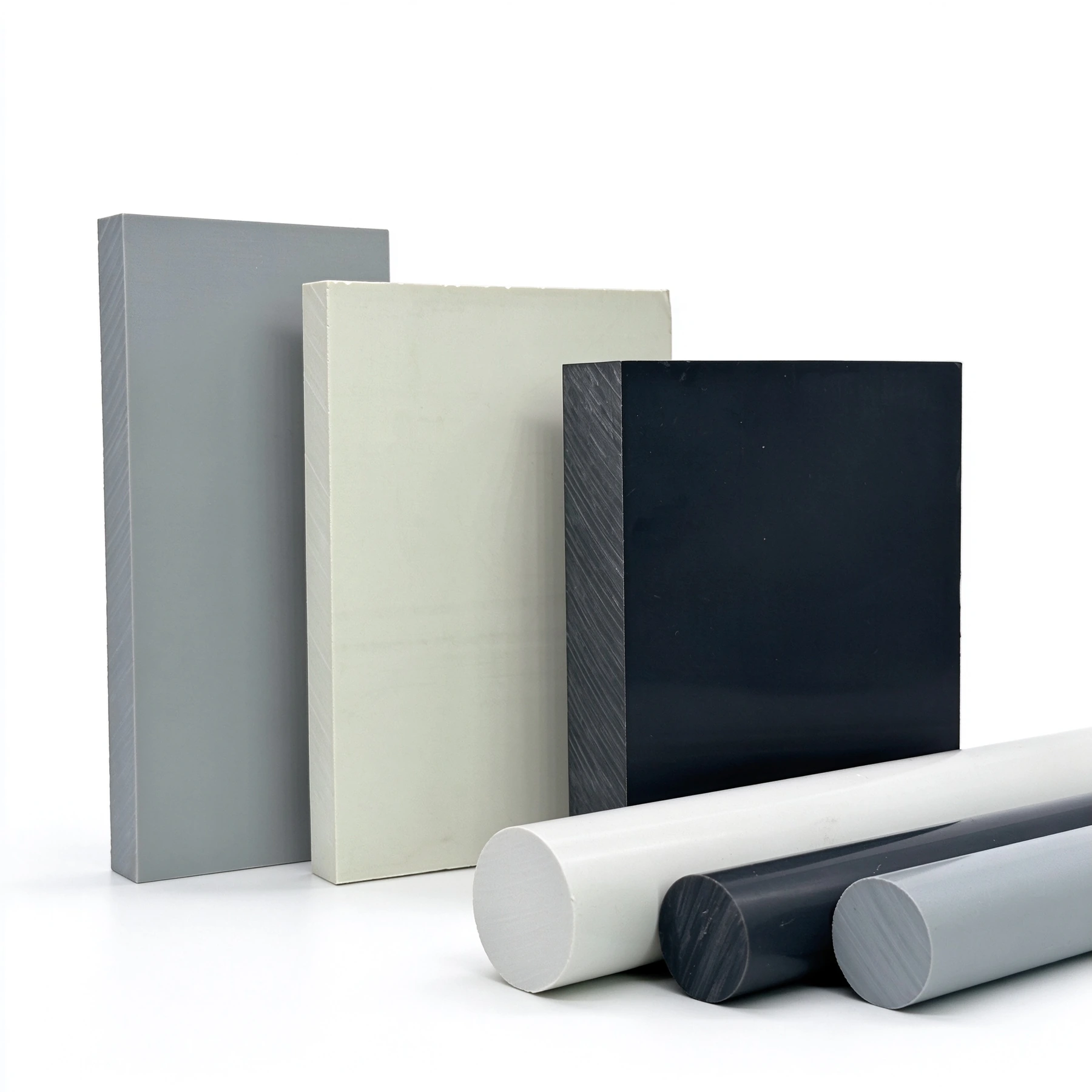
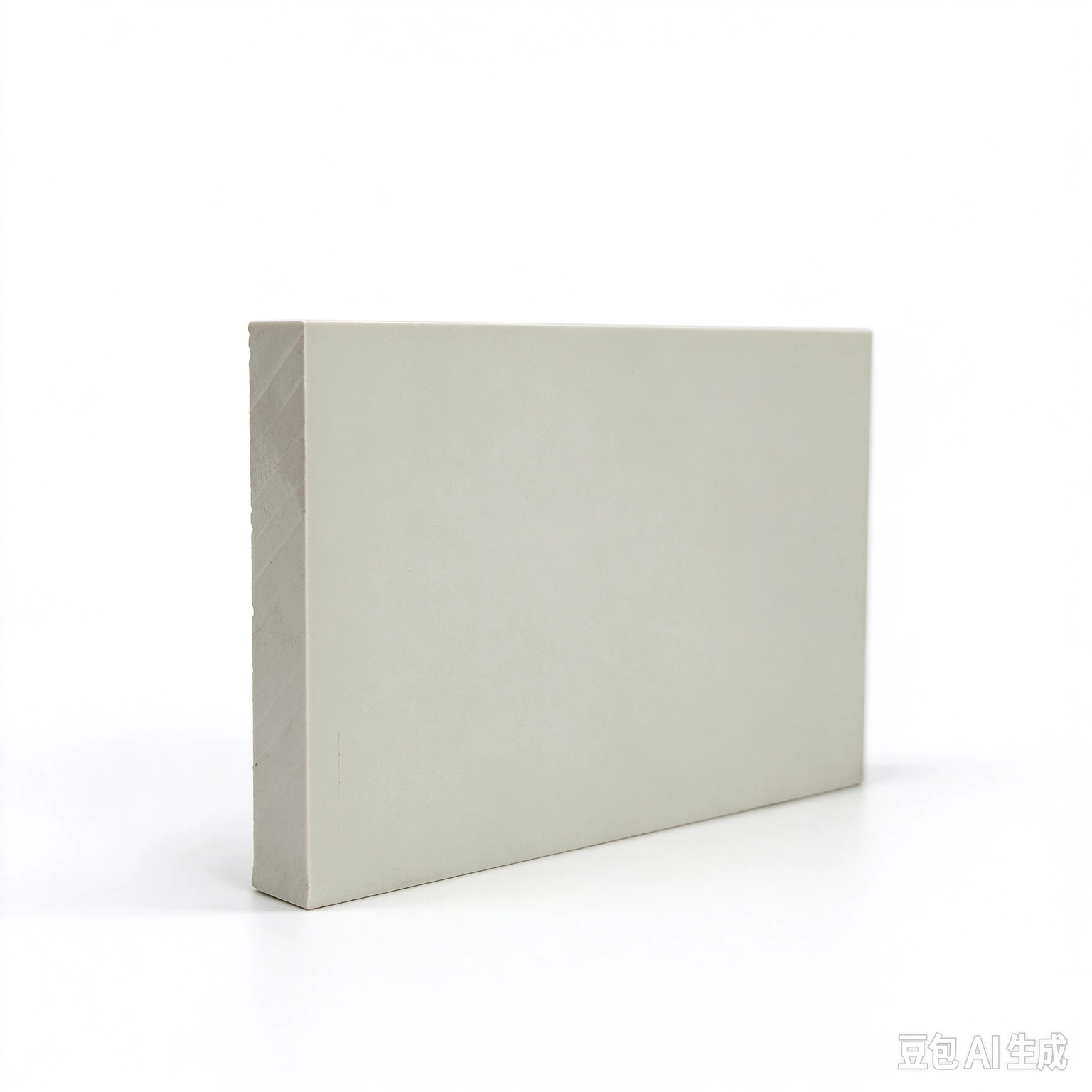
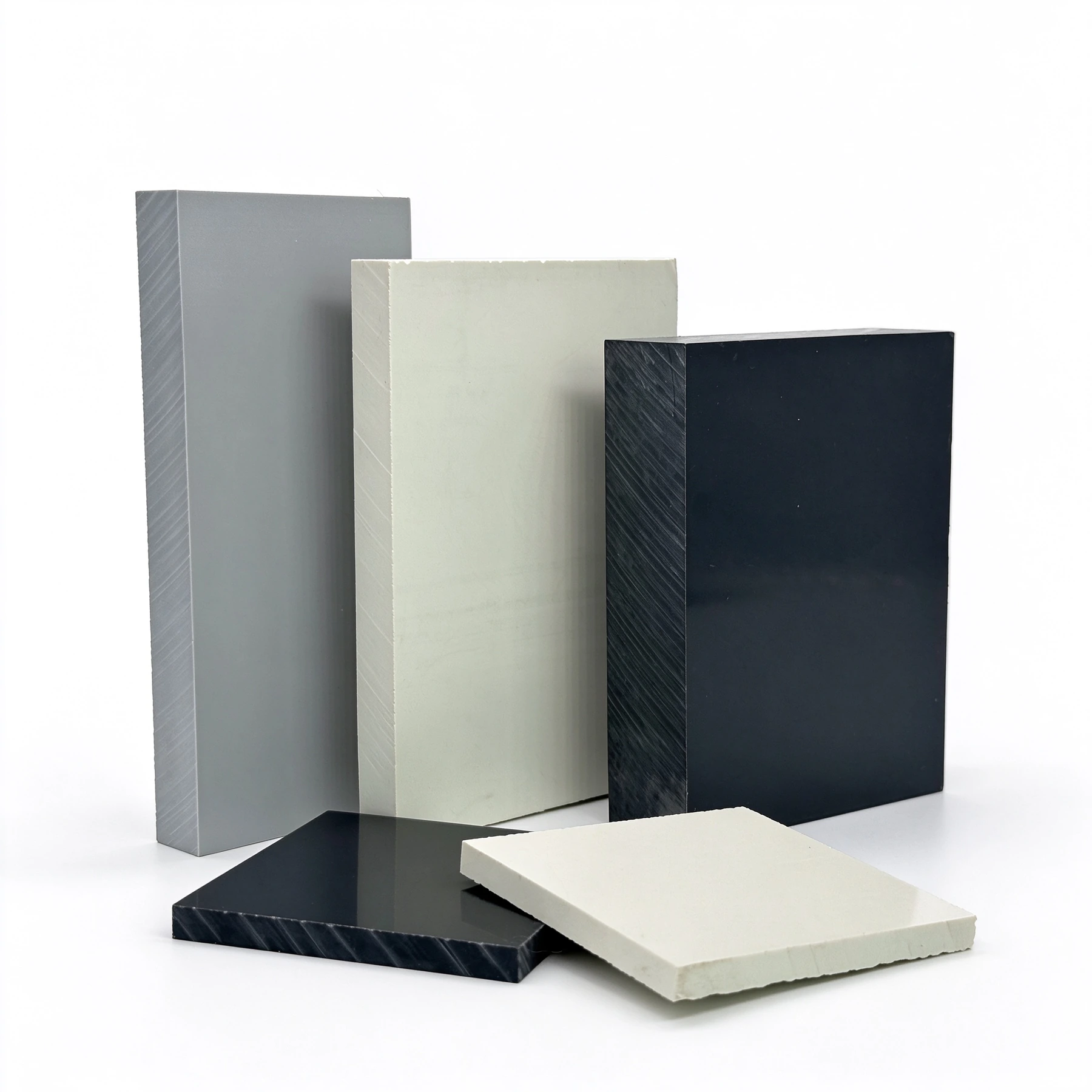
| Colors | Gray, Dark gray, Beige, Black, Red, Clear grades |
| Special properties | Flame-rated, impact-modified, weather-resistant, transparent and approved food/drinking-water grades must be specified individually. CPVC is a separate option for higher temperatures. |
Detailed values describe PVC-U, rigid extruded sheet. Family ranges are broader selection references and may include different grades or reinforcement levels. Confirm the selected grade, condition and test method for your part.
| Property | Metric | Imperial | Test method / conditions |
|---|---|---|---|
| Density | 1.45 g/cm³ | 0.0524 lb/in³ | ISO 1183 · 23°C · Reference: PVC-U, rigid extruded sheet |
| Yield Stress | 58 MPa | 8,410 psi | ISO 527 · Reference: PVC-U, rigid extruded sheet |
| Elongation at Yield | 4 % | 4 % | ISO 527 · Reference: PVC-U, rigid extruded sheet |
| Modulus of Elasticity | 3,300 MPa | 479,000 psi | ISO 527 · Reference: PVC-U, rigid extruded sheet |
| Charpy Notched | 4 kJ/m² | 1.9 ft·lb/in² | ISO 179 · Reference: PVC-U, rigid extruded sheet |
| Ball Indentation Hardness | 82 N/mm² | 82 N/mm² | ISO 2039-1 · Reference: PVC-U, rigid extruded sheet |
| Coeff. Thermal Expansion | 0.8×10⁻⁴ /K | 0.8×10⁻⁴ /K | DIN 53752 · Reference: PVC-U, rigid extruded sheet |
| Max Service Temp. | 60 °C | 140 °F | Without significant mechanical stress · Reference: PVC-U, rigid extruded sheet |
| Flammability | V-0 (UL94) | V-0 (UL94) | UL 94 · Reference: PVC-U, rigid extruded sheet |
| Property | Family reference |
|---|---|
| Material class | General-purpose plastic |
| Density (g/cm³) | 1.35–1.45 |
| Tensile strength (MPa) | 40–60 |
| Elongation at break (%) | 10–40 |
| Elastic modulus (GPa) | 2.4–4.1 |
| Hardness | Shore D75–85 |
| Temperature reference (°C) | Service temperature ≤60 |
Injection molding, CNC milling and turning of sheet or rod, and welding. Control processing heat carefully. Select an impact-modified grade for cold use. Food or drinking-water contact requires the appropriate grade documentation; additives and stabilizers also matter.
Good resistance to acids, alkalis and salts, useful rigidity and low cost. It can be welded or solvent-bonded; flame performance is grade-dependent.
Limited heat resistance, with a reference service ceiling near 60°C, and reduced impact resistance at low temperature. Overheating can decompose PVC and release corrosive hydrogen chloride.
Compare materials for the loads, temperature and environment your part will face.
We review tool access, geometry and material choice before manufacturing.
Dimensional checks and inspection reports for the critical features on your drawing.
Control processing heat carefully. Select an impact-modified grade for cold use. Food or drinking-water contact requires the appropriate grade documentation; additives and stabilizers also matter. Painting, printing and screen printing; solvent bonding and thermal welding. Electroplating is generally unsuitable.
Pipes, fittings, valves, chemical tank linings, profiles, sheet parts and ventilation systems.
Injection molding, CNC milling and turning of sheet or rod, and welding.
Painting, printing and screen printing; solvent bonding and thermal welding. Electroplating is generally unsuitable.
Control processing heat carefully. Select an impact-modified grade for cold use. Food or drinking-water contact requires the appropriate grade documentation; additives and stabilizers also matter.
Gray, dark gray, beige, black and red. Clear rigid grades and custom colors require grade selection.
Upload your CAD files and tell us the material and quantity you need.
Talk to an engineer