
Design feedback before production
We review tool access, geometry and material choice before manufacturing.


















| Property | Details |
|---|---|
| Colors | Chrome |
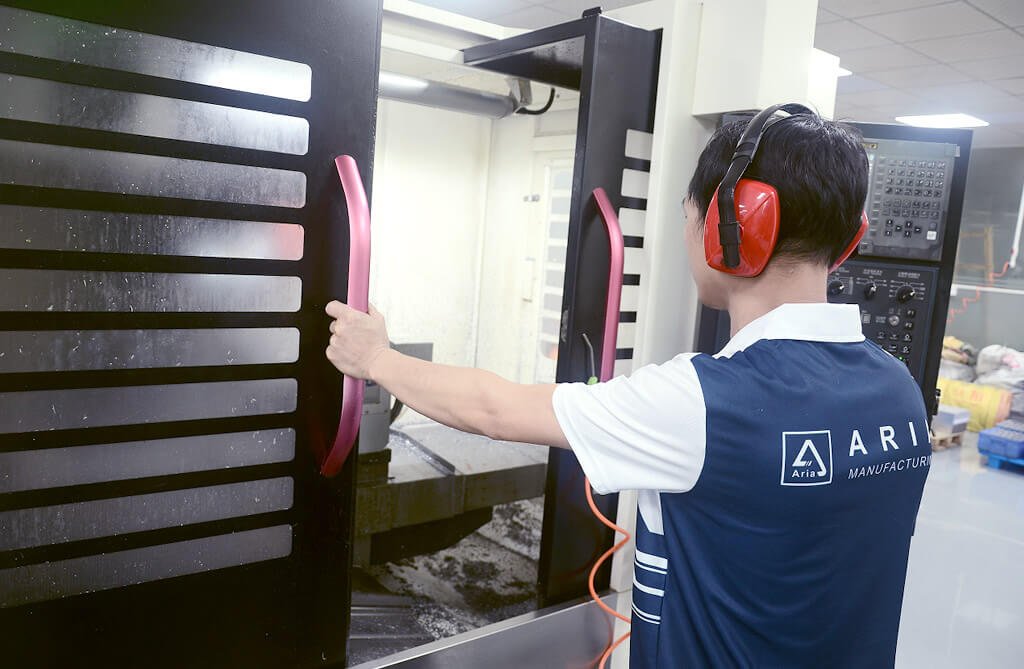
We review tool access, geometry and material choice before manufacturing.
Dimensional checks and inspection reports for the critical features on your drawing.
Tooling, finishing and inspection included in your delivery schedule.
Electroplating or chrome plating requires plating-grade ABS. Flame-retardant grades may limit light colors and plating adhesion. Confirm bright-color consistency. Machined and printed parts need a separate texturing process rather than mold texturing. Painting, screen printing, pad printing, laser engraving, plating, vacuum metallization, hot stamping, water-transfer printing and polishing. Mold texturing applies to injection-molded parts.
Choose cleaning, paint and adhesive systems that avoid stress cracking. Dry before molding to prevent hydrolysis; select UV protection outdoors and hard coating when scratch resistance matters. Painting, hard coating, printing, vacuum metallization and laser engraving. Use compatible adhesive systems.
Typical molding shrinkage in the supplied guidance is 1.9–2.1%. Control processing temperature and follow the grade datasheet; excessive heat can decompose POM and release formaldehyde. Homopolymer and copolymer values are not interchangeable. Laser marking; printing, painting or bonding need a suitable primer or flame/plasma pretreatment. Electroplating is generally unsuitable.
Use equipment suited to the grade processing window, approximately 360–400°C in the supplied guidance. Control crystallinity through molding and annealing. Reinforced grades are direction-dependent. Laser marking; limited coating options and plasma pretreatment for bonding. Electroplating is generally unsuitable.
Gate position and flow direction are critical. Keep weld lines away from loaded areas and confirm reinforcement, drying and flame-rating requirements. Laser marking; circuit metallization is possible with suitable MID/LDS material and process selection. Decorative painting is less common.
Use reinforced grades where unfilled PBT cannot meet structural stiffness or heat requirements. Select hydrolysis resistance for hot/wet exposure and specify the required flame rating. Laser marking, painting, printing and qualified bonding. Suitable grades may be laser-welded.
Account for gate position, flow direction and dry/conditioned dimensions. Do not apply the 33% glass-filled values to unfilled PPA. Laser marking; limited coating options and laser welding with compatible grades.
Allow for multi-day post-curing where required, stress-relief annealing and moisture control for close tolerances. Confirm final properties after the specified post-treatment. Laser marking and plasma pretreatment for bonding. Electroplating is generally unsuitable.
Protect notched features from impact. Dry before molding to limit hydrolysis, and avoid prolonged strong-alkali, hot-water or steam exposure. Laser marking, printing and qualified bonding. Electroplating is generally unsuitable.
Use appropriate reinforced grades for loaded components. Unfilled and reinforced HDT values differ substantially, so keep grade and load attached to each value. Laser marking and plasma treatment. Electroplating is generally unsuitable.
Upload your CAD files and tell us the material and quantity you need.
Talk to an engineer